Insights · Article · Field engineering · Apr 2026
How we structure pre-flight and pre-mission gates for small UAS and ground robots: environmental limits, sensor baselines, comms checks, and documented sign-off that holds up under audit.
Field robotics and uncrewed aerial systems share a failure mode that paperwork alone cannot fix: the machine is correct on the bench and wrong in the environment. Wind shear, dust, magnetic interference, GNSS multipath, and operator fatigue change the system faster than most ticket templates capture. Qualification is therefore a disciplined rehearsal of the mission profile, not a one-time lab sign-off.
We treat qualification as a layered contract between program management, safety, and the crew on the ground. The checklist is the interface. Each line item maps to a sensor, a limit, or a human decision that can be traced if something goes wrong after takeoff or during autonomous traverse. When the checklist is vague, teams improvise under pressure and the record stops matching reality.
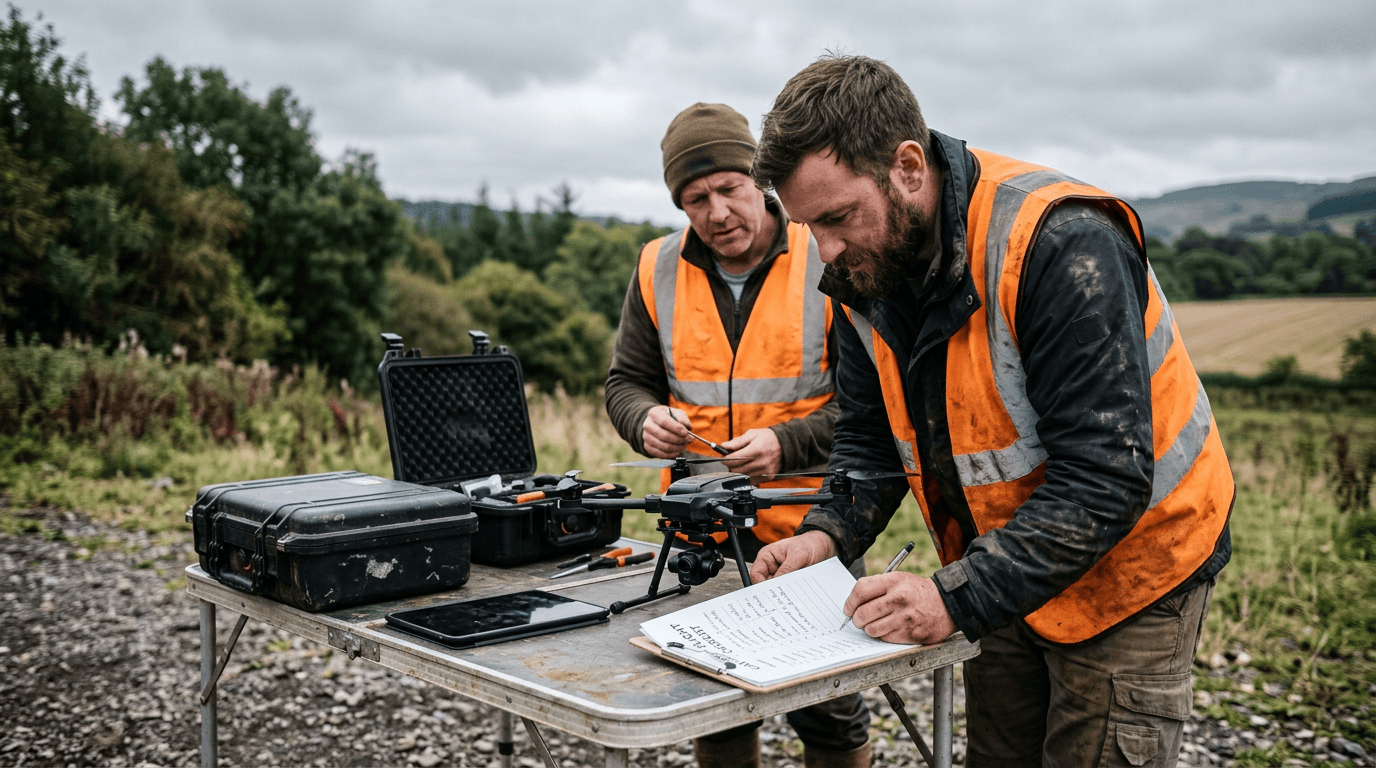
Start with environmental gates expressed in numbers, not adjectives. Maximum sustained wind, gust margin, precipitation class, and temperature band should be copied from the airframe vendor envelope and then narrowed for your payload and operational assurance level. If the mission needs tighter limits than the catalog allows, that gap is an explicit risk acceptance, not an informal team habit.
Sensor baselines matter as much as motors. IMU bias drift, magnetometer calibration quality, and baro health checks should be recorded at the field station before props spin. Robotics teams should capture wheel odometry drift, lidar warm-up time, and camera exposure stability under the same lighting you expect during the task. A two-minute skipped calibration can erase hours of simulation work.
Communications qualification is where many programs discover hidden dependencies. Beyond signal strength, document link budget assumptions: which radios are primary, which are fallbacks, and what happens when the mesh degrades. For robotics, include latency thresholds for supervisory stop and the maximum time a vehicle may proceed without an operator heartbeat.
Battery and thermal discipline deserve their own subsection. State-of-charge at launch, cell temperature at swap, and charging source traceability are operational data, not maintenance trivia. In cold environments, derate flight time before you derate safety margins; in heat, enforce cool-down intervals that match the pack chemistry rather than the schedule.
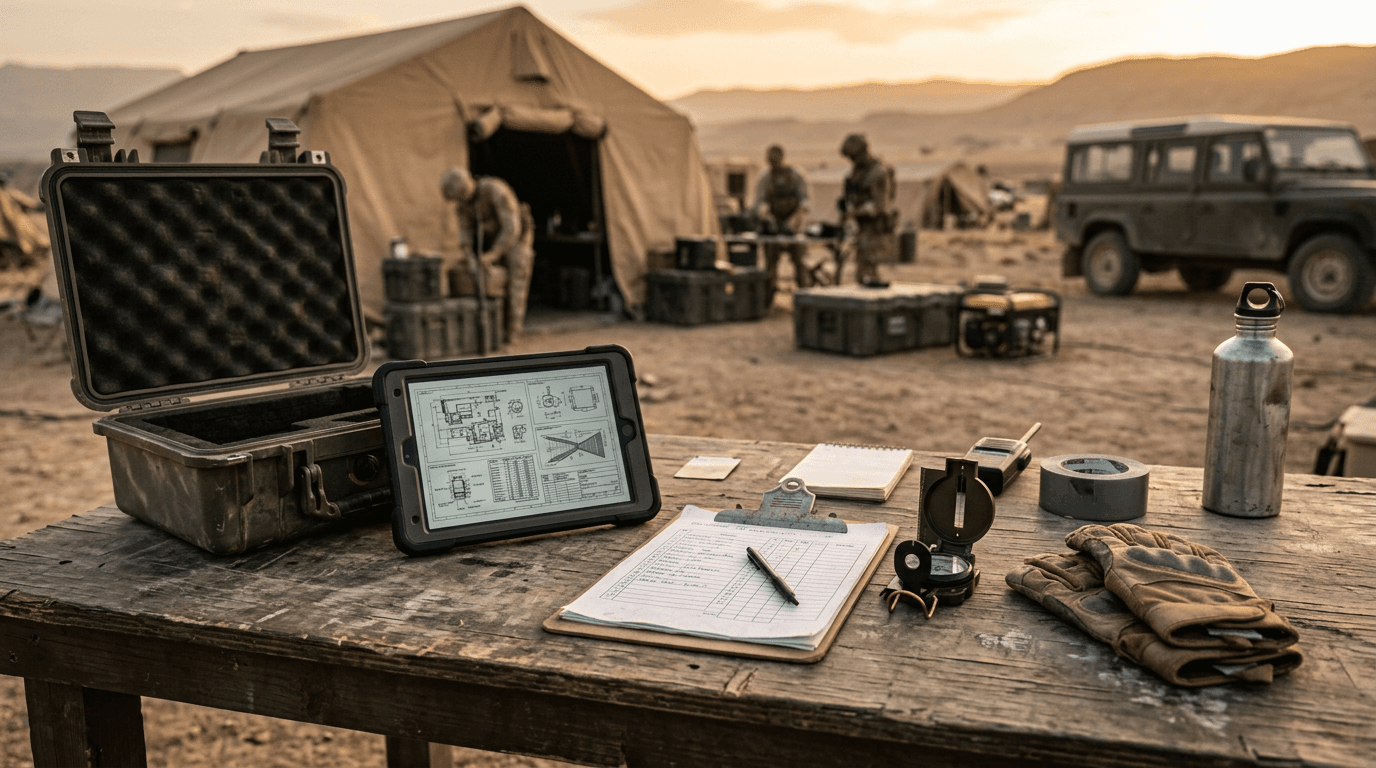
Human factors belong on the same page as hardware limits. Crew rest, role clarity, and language for abort should be rehearsed until they are boring. An abort called late because two people used different words for the same condition is an organizational defect, not pilot error.
Finally, bind qualification results to configuration management. Firmware hashes, parameter files, and mechanical configuration identifiers should appear on the signed record. If the vehicle that flew is not the vehicle that was qualified, the chain of evidence breaks and lessons learned become unreliable. Field engineering is as much about traceability as it is about torque specs.
We facilitate small-group sessions for customers and prospects without requiring a slide deck, focused on your stack, constraints, and the decisions you need to make next.