Insights · Article · Parachute Systems · Apr 2026
How to select the correct cargo parachute system for a given load weight, determine when cluster systems are required, calculate descent rates and landing impact energies, and document the selection rationale for mission authorization.
Cargo parachute system selection is an engineering calculation, not an experience-based judgment. The primary inputs to the selection are the gross load weight, the required descent rate at the landing altitude and temperature, the acceptable landing impact energy for the cargo, and the extraction and deployment airspeed range. Together these inputs define the minimum and maximum canopy drag area required. The selection from available canopy types is then made from this drag area requirement, constrained by the container volume available, the extraction system capability of the aircraft, and the applicable regulatory or program-specific safety factors.
Descent rate calculation begins with the drag area requirement. The equilibrium descent rate is the velocity at which the aerodynamic drag of the canopy system, modified by the local air density, equals the weight of the load. At higher altitude, where air density is lower, the equilibrium descent rate is higher for the same canopy system and load weight. Programs that qualify a system at sea level and then deploy it at high altitude without recalculating the descent rate will deliver cargo at a significantly higher landing velocity than intended, with corresponding higher landing impact loads on the cargo.
Landing impact energy for the cargo is a function of the landing velocity and the deceleration distance the cargo item can tolerate. Fragile cargo requires both a low landing velocity and a significant cushion depth to limit peak deceleration. Robust cargo can tolerate higher landing velocities. The impact energy calculation sets the upper bound on the acceptable descent rate, which then sets the lower bound on the required canopy drag area. Matching the parachute system to cargo fragility is a more sophisticated approach than simply using the lightest system that will slow the load to a survivable impact speed for humans.
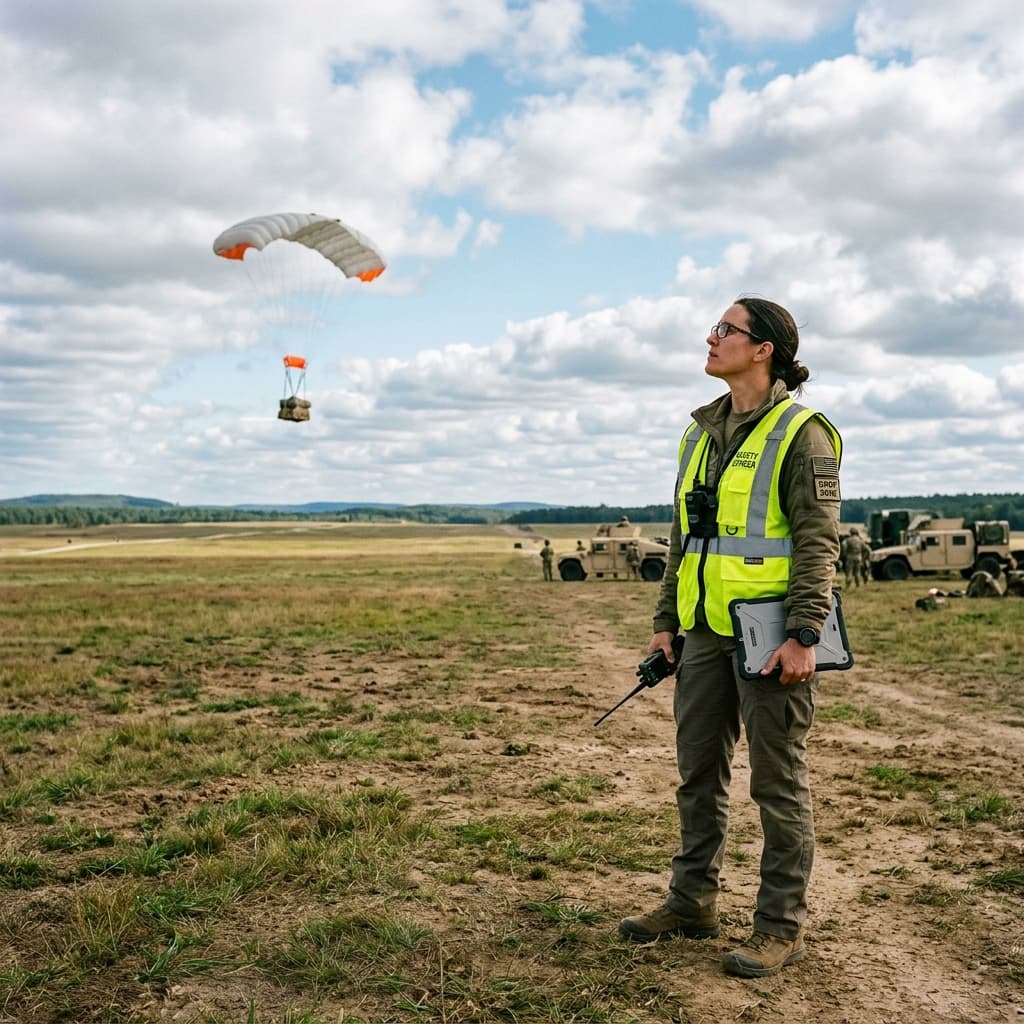
Single canopy systems are the simplest and most reliable configuration for loads within the rated capacity of a single canopy type. The selection criterion is that the load weight falls within the certified weight range for the canopy type, that the descent rate at the minimum landing altitude, highest expected temperature, and maximum load weight is within the acceptable range for the cargo, and that the deployment airspeed is within the certified deployment speed range for the canopy. Systems that operate routinely near the upper limit of any of these parameters carry higher uncertainty in their predicted performance and warrant a larger design margin.
Cluster systems become necessary when the load weight exceeds the maximum capacity of a single canopy type or when the descent rate requirement cannot be met by a single canopy within the envelope constraints imposed by the aircraft or the container volume. A two-canopy cluster doubles the effective drag area but introduces a synchronization requirement: both canopies must deploy and inflate within a timing window that prevents one canopy from taking all the load while the other is still inflating. The timing dependence in cluster systems is managed through careful rigging of the sequential deployment hardware and through qualification testing that verifies the cluster behavior across the expected weight and airspeed range.
Cluster system failure mode analysis must cover the partial failure scenario. A cluster system that continues to deliver cargo safely if one canopy fails to deploy fully, with the remaining canopies providing enough drag to slow the load to an acceptable landing velocity, is more robust than one that delivers an acceptable descent rate only when all canopies function perfectly. Cluster systems designed for critical cargo should demonstrate, through analysis and test, that the single-canopy failure case still results in a survivable impact for the cargo and does not create a safety hazard for people or structures in the impact zone.
Container volume and rigging complexity increase significantly with cluster systems. A two-canopy cluster requires a container design that can simultaneously route two independent deployment bags and their associated lines without tangling during extraction. The rigging procedure for a cluster system is longer, more complex, and more dependent on sequence discipline than a single-canopy system. Qualification of the rigger for cluster system operations should include specific training and proficiency assessment beyond what is required for single-canopy certification.
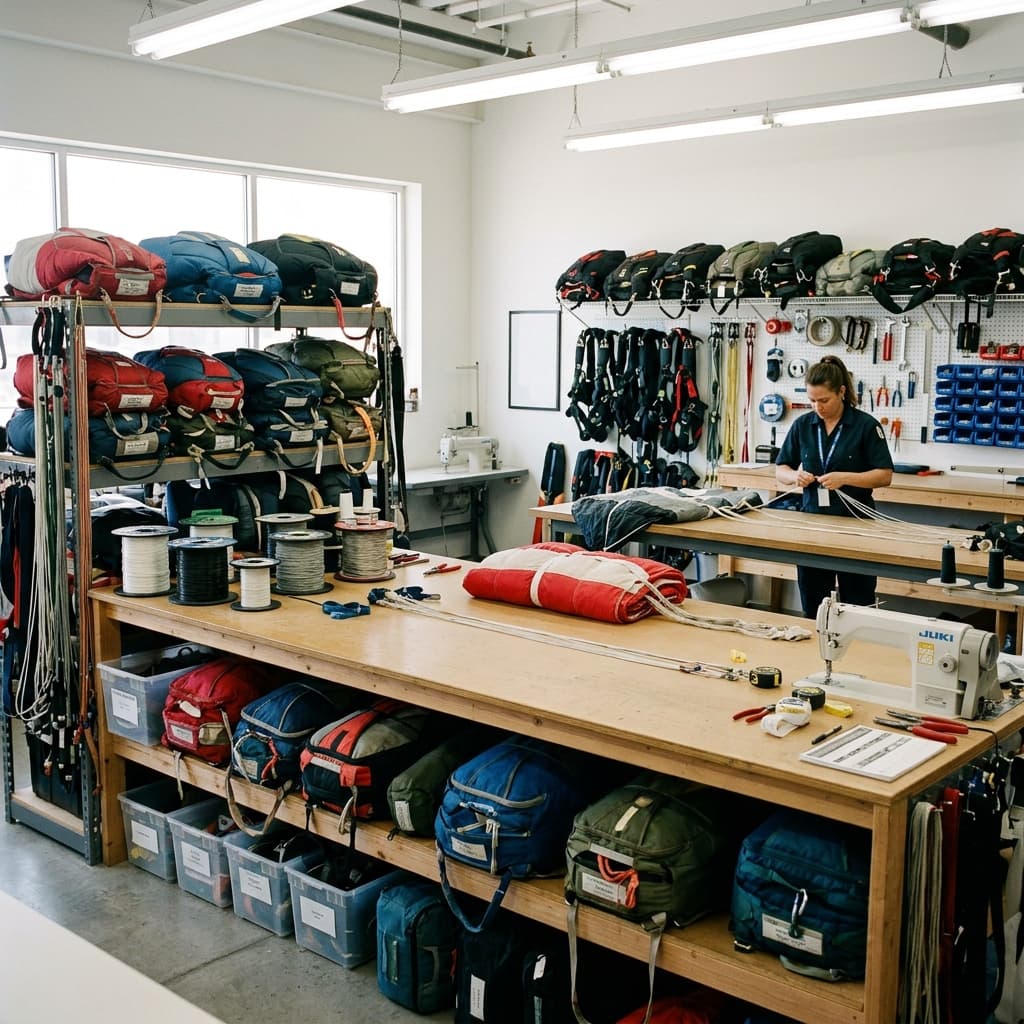
Weight verification is a mandatory gate before every cargo airdrop. The nominal planned weight may differ from the actual rigged weight because of last-minute cargo substitutions, additional packaging materials, or incorrect weight documentation for the cargo items. Weighing the rigged container on a certified scale, with all parachute hardware attached, immediately before loading onto the aircraft is the only way to confirm that the parachute system selected matches the actual load weight. A weight discrepancy discovered at this stage is far better than one discovered through anomalous descent behavior during the drop.
Documentation of the cargo parachute system selection should be retained as part of the mission package. The documentation should include the cargo description, the actual rigged weight, the selected canopy model and count, the calculated descent rate at the mission altitude and temperature, the expected canopy opening force, the deployment airspeed and altitude, and the authorization signature from the qualified person responsible for system selection. This record closes the accountability loop and provides essential context if the delivery does not go as planned.
Training scenarios for cargo parachute programs should include exercises where the planned canopy system is mismatched to the load, requiring the student to identify the discrepancy and select the correct system before proceeding. Operators and riggers who only practice with correct configurations develop confidence without resilience. Structured exercises in identifying and correcting configuration errors, with documented assessment criteria, build the professional judgment that sustains safe program operations across the full range of cargo types and weight categories that operational demand will eventually present.
We facilitate small-group sessions for customers and prospects without requiring a slide deck, focused on your stack, constraints, and the decisions you need to make next.