Insights · Article · Parachute Systems · Apr 2026
How to apply structured fabric inspection standards to parachute canopies: measuring porosity, assessing seam tape and stitching integrity, classifying damage by type and severity, and making consistent serviceability determinations.
Parachute canopy fabric inspection is the discipline through which a qualified rigger determines whether a canopy remains airworthy after storage, use, or exposure to conditions that may have affected the material. The inspection is not primarily a visual exercise, although visual examination is part of it. It is an evidence-based assessment that combines measured porosity, documented seam evaluation, systematic damage classification, and a serviceability judgment that the assigned rigger is prepared to defend if the canopy is subsequently involved in an incident.
Porosity is the fundamental aerodynamic property of the canopy fabric. A canopy that has become too porous because of UV degradation, abrasion, or solvent exposure will generate less drag and descend faster than its design rate. A canopy that has been contaminated with oil or other occluding substances may have artificially low porosity that causes instability during opening and deployment. The inspection standard should specify the porosity measurement method, typically a calibrated permeameter at a defined differential pressure, the pass limits for the fabric type, and the sampling pattern for a canopy of each size.
Seam inspection covers several distinct engineering elements that should be assessed separately. The radial seam tape, which runs from the apex to the skirt and takes the primary deployment load, should be examined for delamination from the fabric, tears in the tape itself, and areas where the tape has lifted and allowed the underlying seam to separate. The seam stitching should be examined under magnification for broken threads, pulling through the fabric, and evidence of sustained overload indicated by distorted stitch geometry. The condition of seam reinforcement patches should be assessed for adhesion integrity and coverage.
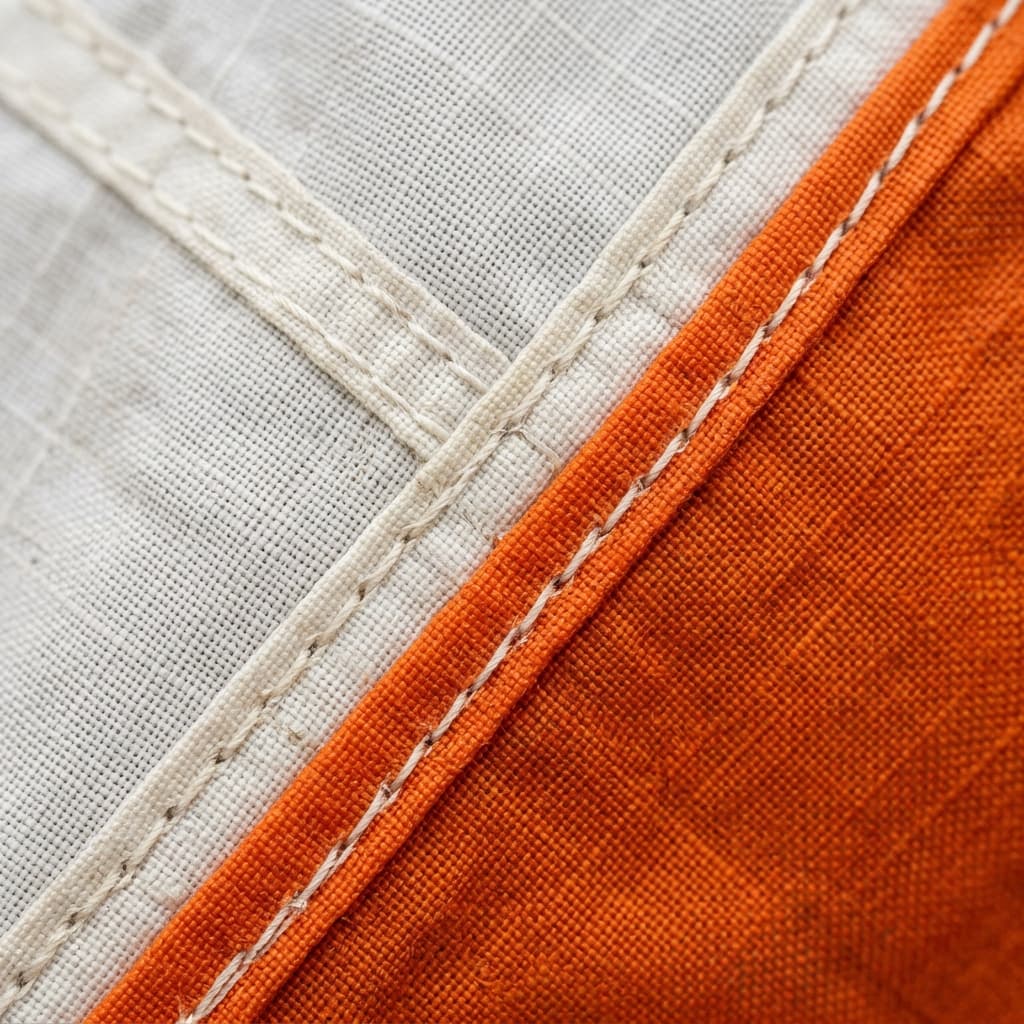
Damage classification provides a consistent language for recording and communicating canopy condition across inspection events and personnel. A three-tier classification is common in parachute programs: cosmetic damage that does not affect structural or aerodynamic performance, repairable damage that can be restored to full serviceability by a qualified rigger using approved materials and procedures, and damage that is beyond economical repair or that cannot be returned to serviceable condition within approved procedures. Each tier should have explicit defining criteria rather than relying on individual judgment calibrated only by experience.
Hole and tear documentation should record the location of each defect in a consistent coordinate system, the dimensions and shape of the defect, the adjacent material condition, and the distance to the nearest radial seam, suspension line attachment point, or vent. This information determines whether the defect is in a high-stress region where its effect on structure is disproportionate to its size, or whether it is in a lower-stress region where a repair can restore the canopy to serviceable condition with acceptable residual uncertainty. A rigger who records only that a hole exists without recording its location cannot make a defensible serviceability determination.
Mold, mildew, and chemical contamination require specialized inspection procedures. Mold and mildew degrade nylon by breaking down the polymer at the filament level, reducing tensile strength in a way that is not visible externally until the canopy has suffered significant loss. Affected fabric often smells musty and may show surface discoloration. The severity assessment should include a tensile test on a sample from an affected patch compared against samples from an unaffected region. Chemical contamination, particularly from hydraulic fluids, petroleum distillates, and strong solvents, can dissolve the resin system that binds the nylon filaments and cause sudden failure at loads well below the rated strength.
Repair qualification matters as much as the repair itself. A canopy repaired using approved materials and procedures by a qualified rigger is airworthy within the limitations stated in the repair approval. A canopy repaired using a field expedient that was not approved is not airworthy, regardless of how well the repair appears visually. Programs should maintain a current list of approved repair procedures for each canopy type in their inventory, ensure that riggers performing repairs have the required qualification for each procedure, and document every repair with the procedure reference, materials used, rigger identity, and authorization signature.
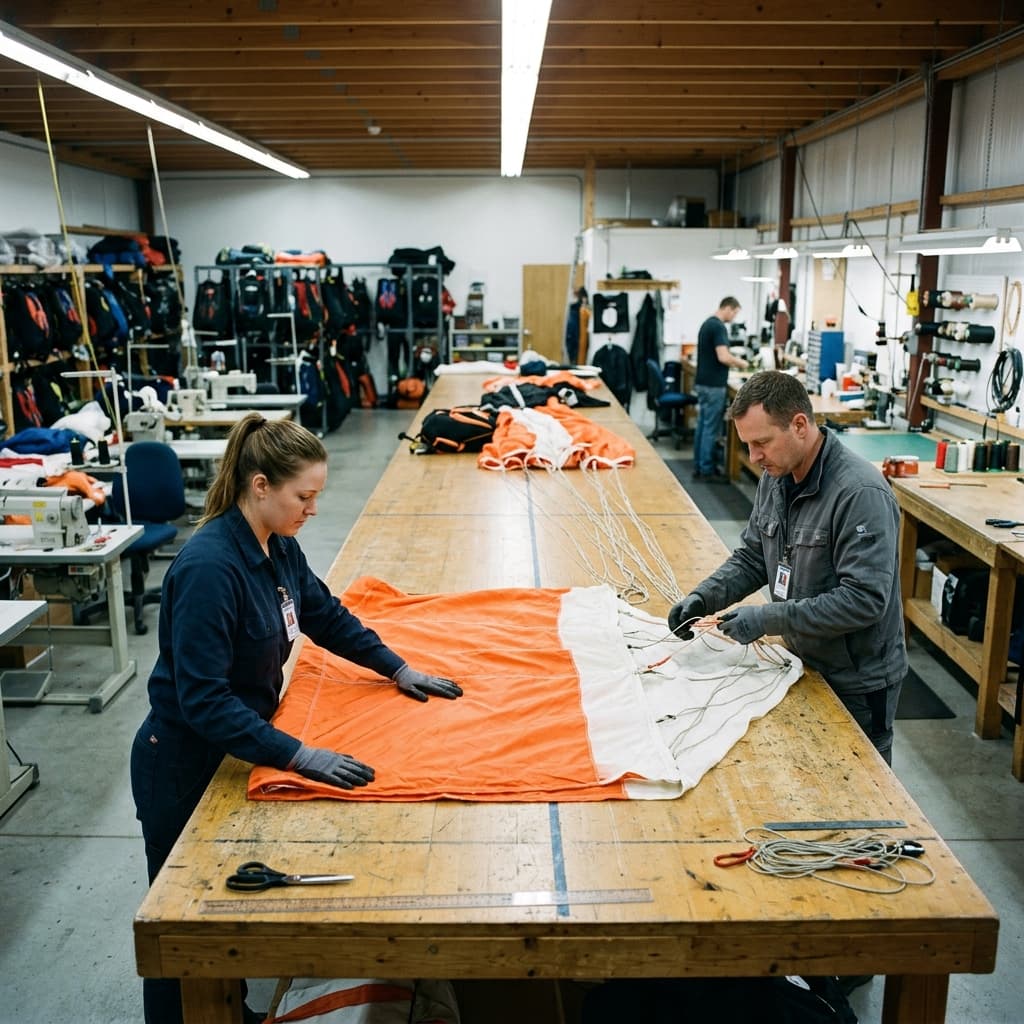
Inspection records for each canopy should be cumulative, not replaced at each inspection. The record should show every inspection date, the inspector's identity and qualification, the findings, the serviceability determination, any repairs performed, and the reference to the applicable inspection procedure. This cumulative record allows the maintenance engineer reviewing a canopy before a high-consequence mission to see the full usage and condition history, not just the most recent inspection result, and to make an informed decision about deployment suitability.
End-of-service-life criteria should be defined in the maintenance program rather than determined case-by-case. Typical criteria include a maximum pack cycle count, a maximum calendar age from date of manufacturer, a maximum number of approved repairs, and a prohibition on return to service after any repair that could not be fully executed per an approved procedure. When any criterion is met, the canopy is retired regardless of its apparent condition. Programs that retire canopies based on criteria rather than on condition tend to generate better safety records because they avoid the optimism bias that affects condition-only assessments of equipment the operator has become familiar with.
We facilitate small-group sessions for customers and prospects without requiring a slide deck, focused on your stack, constraints, and the decisions you need to make next.