Insights · Article · Parachute Systems · Apr 2026
Detailed guidance on rigging airdrop cargo containers for precision delivery: load attachment, extraction system setup, container reinforcement, weight and balance verification, and the documentation trail that supports mission authorization.
Airdrop container rigging is an engineering discipline that combines load calculation, structural assessment, parachute system matching, and procedural discipline into a repeatable process for delivering cargo safely from the air to a designated point on the ground. Rigging errors have consequences that are proportional to the weight of the load and the fragility of what it contains. A container that opens prematurely, sheds a parachute during extraction, or impacts the ground at excessive velocity because of a miscalculated descent rate creates risk for both the receiving party and any people and infrastructure in the impact zone.
Load attachment is the fundamental starting point of container rigging. The attachment hardware, whether sling, spreader bar, clevises, or integrated pallet connectors, must be rated for the static load of the container multiplied by the dynamic load factor applicable to the extraction and deployment sequence. Dynamic loads during parachute deployment can be several times the static weight, particularly for high-speed extraction configurations. The minimum break strength of every load attachment element should exceed the dynamic design load by the safety factor specified in the applicable rigging manual, not just the static weight.
Container structural integrity assessment should precede every rigging event. The container must be capable of transmitting the extraction and deployment loads through its structure from the parachute attachment point to the cargo. Cardboard and unreinforced plastic containers are not appropriate for airdrop unless specifically designed and tested for the purpose. Containers designed for airdrop use should have documented load ratings and condition inspection criteria. Containers that show corner damage, major dent deformation, or compromised closure integrity should be rejected before rigging begins.
Weight and balance verification is a mandatory step that must be completed after all cargo is loaded and secured inside the container and before the parachute system is rigged. The actual gross weight of the loaded container must be measured, not estimated, because the parachute system selection and the descent rate calculation depend on the actual weight, not the planned weight. Cargo that shifts during flight or is incorrectly balanced can cause pendular oscillation under the canopy that degrades accuracy and, in severe cases, leads to container inversion or line entanglement.
Parachute system selection for a given container is governed by the descent rate required at the target weight. The descent rate target balances payload protection, landing impact loads, and system complexity. Fragile or high-value cargo may require a lower descent rate that necessitates a larger canopy or a cluster system. Robust or expendable cargo may accept a higher descent rate with a smaller, simpler system. The selection should be documented with the weight, the canopy model and size, the expected descent rate at the specified altitude and temperature conditions, and the applicable rigging procedure reference.
The extraction system setup determines how the container leaves the aircraft and initiates the parachute sequence. Static line systems extract the container and deploy the pilot chute automatically. Gravity extraction systems rely on the spatial reference of a pre-deployed parachute. In either case, the extraction force required to pull the container clear of the aircraft must not exceed the structural limits of the container attachment points, the aircraft floor anchor system, or the extraction parachute itself. The static line length, break cord strength, and anchor attachment point selection are all engineering decisions that must be made explicitly and documented.
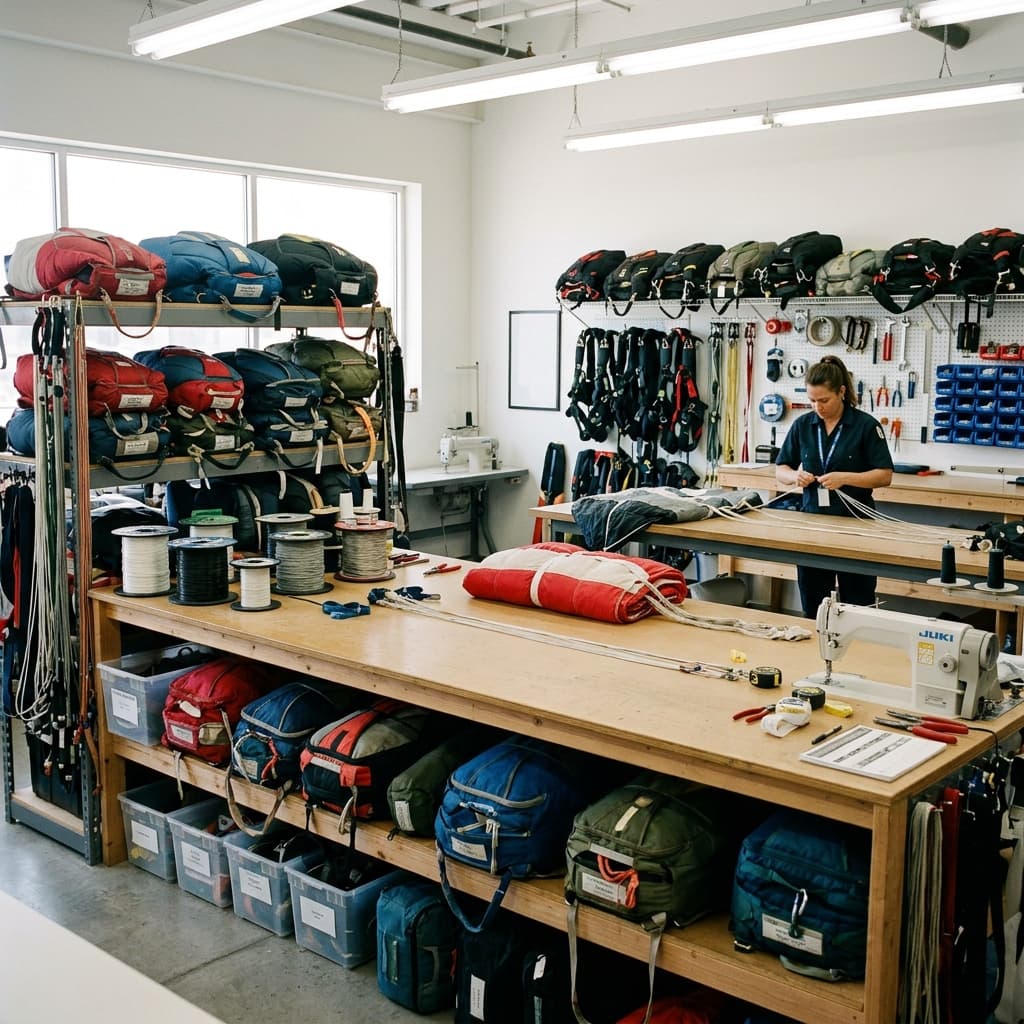
Cushioning and cargo securing within the container are rigging-phase responsibilities, not packaging department responsibilities. Every cubic centimeter of space above and around the cargo that remains unfilled allows the cargo to move during deployment loads and potentially damage the container or shift the center of gravity. Void fill material should be selected to provide cushioning at the expected impact deceleration, to resist compression during deployment loads, and to remain in place rather than migrating to one side of the container during the tumbling that can occur between extraction and deployment.
Waterproofing and environmental protection of the rigged container must match the expected shipping and deployment environment. A container rigged for a water insertion may need sealed closures and buoyant materials that keep the cargo afloat until recovery. A container dropped in Arctic conditions needs closures that remain functional at low temperatures rather than closures whose gaskets harden and crack. The rigging procedure should specify the environmental protection measures required for the planned mission profile, and the rigging inspector should verify that all protection measures are installed correctly.
Documentation of the rigged container should include a checklist with sign-off at each critical step, the actual measured weight, the parachute serial number and last inspection date, the cargo description and fragility classification, the extraction system configuration, the rigging technician identity and qualification, and the inspection authority. This documentation travels with the container to the aircraft and is retained after the mission as part of the load history. In the event of an anomaly during delivery, this record provides the investigation team with the specific configuration and the identity of each person who was responsible for any element of the rigging.
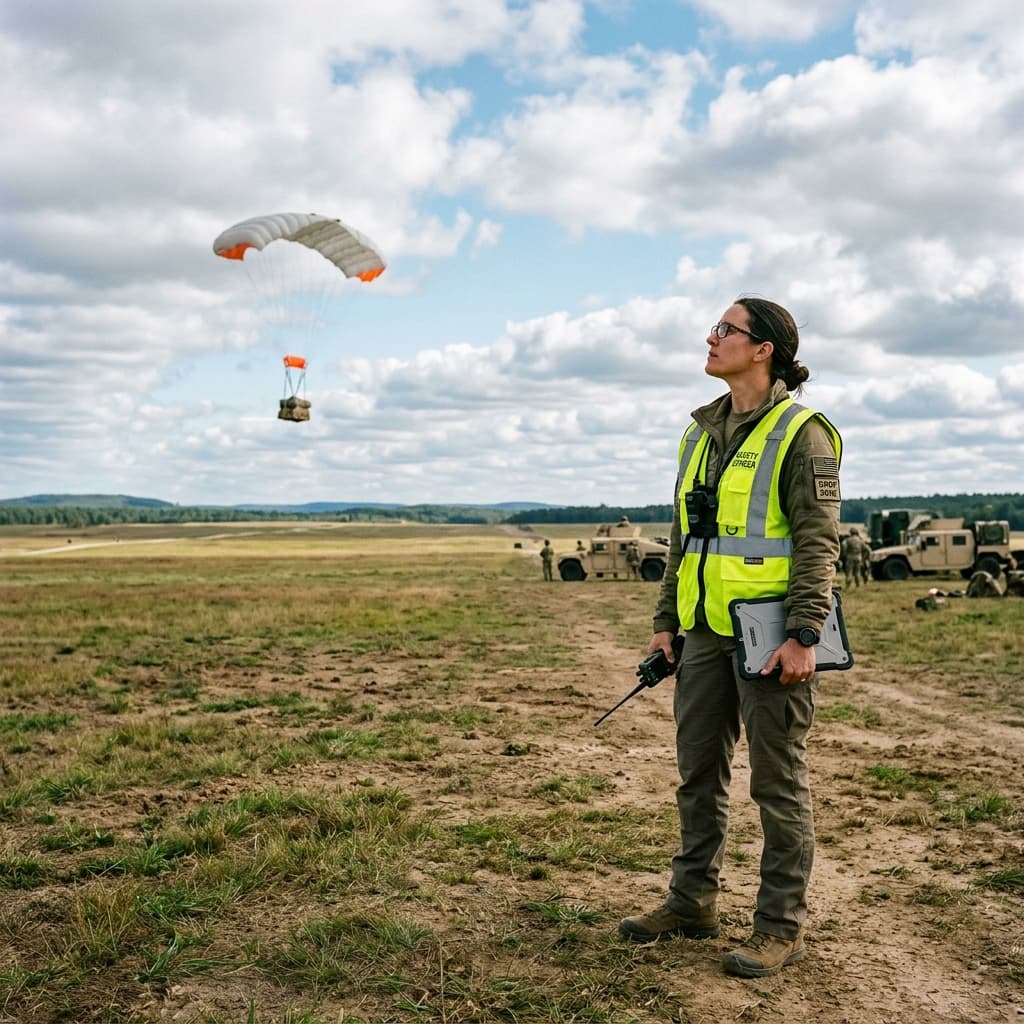
Post-delivery assessment completes the loop. For training and development programs, recovery of the container and an assessment of cargo condition, canopy deployment quality, and impact pattern relative to the intended landing zone provides feedback that improves both rigging technique and mission planning. For operational programs, even a brief ground observation of the delivery provides data on descent rate, drift from predicted landing point, and container condition that can be compared against the pre-delivery predictions. Programs that never collect post-delivery data cannot improve their rigging procedures based on real outcomes.
We facilitate small-group sessions for customers and prospects without requiring a slide deck, focused on your stack, constraints, and the decisions you need to make next.