Insights · Article · Strategy · Apr 2026
Capability maps, manager accountability, and vendor mixes that connect training hours to delivery outcomes executives can recognize.

Digital skills programs fail quietly when organizations measure them in course completions instead of business outcomes. Leadership teams approve generous budgets in year one, then cut funding when they see enrollment dashboards rather than delivery improvements. Sustainable programs tie learning paths directly to product roadmaps, operational service level agreements, and role expectations that managers reinforce weekly through coaching conversations and stretch assignments.
The root problem is structural. Most companies bolt training onto existing workflows without adjusting capacity, incentives, or performance criteria. Engineers attend courses during slow weeks and forget the material before the next sprint begins. Finance teams see a growing line item with no attributable return on investment. Without deliberate architecture around how skills programs connect to actual project work, even the best content library becomes expensive shelfware within two quarters.
Economic uncertainty intensifies the challenge further. When revenue forecasts soften, learning and development budgets face immediate scrutiny because they lack the contractual protection of infrastructure licenses or headcount commitments. Programs that survive downturns share a common trait: they produce clear evidence connecting upskilling hours to measurable improvements in delivery velocity, software quality, incident response time, or customer satisfaction scores that finance teams can verify independently.
Begin with a capability map that spans technology fluency, data literacy, and security awareness across every department that touches digital products or internal tooling. Show which roles need depth in specialized domains versus breadth across platforms. Map current proficiency levels against target state for each job family using a simple rubric. Executives fund clarity and specificity; they resist approving another generic learning library subscription that promises universal coverage but measures nothing meaningful.
Build the map collaboratively with engineering leads, product managers, and operations directors. Each stakeholder group understands different dimensions of skill gaps. Platform teams know which infrastructure competencies are thin. Product managers see where data fluency limits experimentation velocity. Operations leaders identify automation shortfalls that create manual toil. Aggregating these perspectives produces a prioritized backlog of skill investments rather than a wish list disconnected from actual delivery constraints.
We facilitate small-group sessions for customers and prospects without requiring a slide deck, focused on your stack, constraints, and the decisions you need to make next.
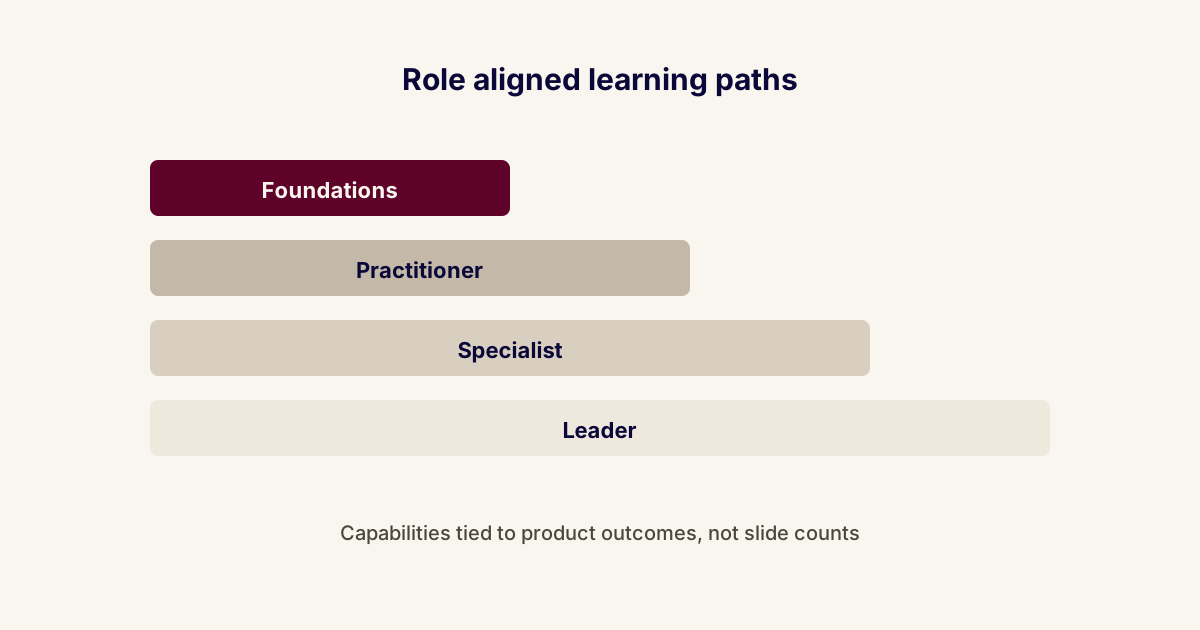
Translate the capability map into progression ladders that describe observable behaviors at each level. Foundation learners can follow documented runbooks. Practitioners troubleshoot novel problems using first principles. Specialists design systems and mentor others. Leaders influence organizational standards and vendor strategy. These definitions remove ambiguity from promotion conversations and give managers a shared vocabulary for talent reviews, staffing decisions, and succession planning across the technology organization.
Managers must own time allocation for skills development. If training only happens after business hours, you signal that learning is optional and less important than feature delivery. Block capacity in sprint planning or project scheduling for upskilling the same way you block time for compliance training that already has executive air cover. Protect that capacity from last minute reallocation when deadlines tighten during release cycles.
Accountability should flow both directions. Individual contributors commit to completing learning paths and applying new skills in upcoming work. Managers commit to creating safe opportunities for practice, providing feedback, and recognizing progress during regular one on one meetings. When both sides honor these commitments, skills development becomes part of the operating rhythm rather than a side activity that competes with every urgent ticket in the backlog.
Consider embedding learning objectives into quarterly goal frameworks alongside delivery targets. When professional growth carries visible weight in performance reviews, engineers and analysts allocate serious attention to it. Organizations that treat learning as a private hobby rather than a shared business priority find that only the most self motivated employees participate, leaving critical skill gaps across the broader workforce unaddressed quarter after quarter.
Blend modalities deliberately based on skill type and learner context. Use cohort based problem solving workshops for complex topics like system design and threat modeling. Reserve microlearning modules for refreshers on tools, syntax, and configuration patterns. Establish internal guilds and communities of practice for ongoing peer support. Pure video catalogs rarely change behavior in platform engineering, data analytics, or security operations domains where hands on repetition matters most.
Cohort programs deserve special investment because they build social accountability and shared language across teams. When six engineers from different squads work through a reliability engineering curriculum together, they form a network that outlasts the course itself. These cross team relationships accelerate incident response, improve architecture reviews, and reduce the coordination overhead that slows large organizations. The learning content becomes a catalyst for organizational connectivity.
Measure applied skills, not just knowledge acquisition. After a Kubernetes primer, ask teams to ship a canary deployment using the golden path your platform team provides. After a data governance workshop, ask product owners to annotate a real production dataset with lineage metadata. These application checkpoints reveal whether training changed behavior or merely occupied calendar time without producing any durable competency improvement.
Build a lightweight skills analytics practice that tracks leading and lagging indicators together. Leading indicators include enrollment rates, module completion velocity, and manager approval of learning time. Lagging indicators include deployment frequency improvements, reduced mean time to recovery, fewer security findings per audit cycle, and faster onboarding for new hires joining teams that completed targeted training. Correlating these signals over multiple quarters builds the evidence base that protects funding.
Vendor selection should emphasize integration with your identity provider, skills analytics platform, and learning management system. Evaluate content freshness rigorously, especially in cloud infrastructure and security domains where best practices shift every six to twelve months. Stale curricula that teach deprecated APIs or outdated compliance frameworks damage program credibility faster than having no formal program at all, because learners lose trust in the entire initiative.

Avoid relying on a single vendor for all content needs. A diversified vendor mix pairs a primary platform for breadth coverage with specialist providers for deep technical domains like advanced machine learning, regulatory compliance, or niche cloud services. Negotiate contracts that include content refresh commitments and usage based pricing so you pay for actual engagement rather than shelf capacity that sits unused across the organization.
Diversity and inclusion deserve explicit design attention in every skills program. Sponsorship, mentorship, and safe practice environments help underrepresented engineers build confidence in high stakes systems like production databases and customer facing platforms. Skills equity is a risk management topic, not solely a human resources initiative, because homogeneous expertise concentrations create single points of failure that threaten organizational resilience during critical incidents or key person departures.
Design learning experiences that accommodate different working styles, time zones, and caregiving responsibilities. Asynchronous options with flexible deadlines ensure that participation does not favor only those with uninterrupted schedules. Provide captioned video, written transcripts, and multilingual resources where your workforce requires them. Accessibility in program design removes invisible barriers that quietly exclude talented people from building the skills your organization needs them to develop.
Budget defense becomes easier when you attach skills investments to risk reduction or revenue acceleration narratives that resonate with financial leadership. Show how targeted training preceded fewer production incidents, faster audit response times, shorter hiring cycles for critical roles, or improved employee retention in competitive talent markets. Frame the investment as insurance against capability erosion rather than a discretionary perk that can be trimmed without consequence during lean quarters.
Present budget proposals with scenario modeling that compares the cost of continued training against the cost of attrition, external hiring, and contractor dependency. When a senior platform engineer leaves because growth opportunities stagnated, the replacement cost often exceeds three years of per capita training investment. Making this comparison explicit in budget discussions shifts the conversation from expense justification to strategic risk management that every chief financial officer understands intuitively.
Review program health quarterly with business unit leaders and technical directors. Sunset content modules that show consistently low engagement or poor application rates. Double down on programs that address skill bottlenecks blocking product roadmaps or platform migrations. Celebrate teams that teach others through internal workshops and documentation contributions. Internal subject matter experts often outperform external instructors for your specific technology stack because they understand your codebase, constraints, and culture.
Long term success requires treating your skills program as a living product rather than a static initiative. Assign an owner who iterates on content, gathers feedback from learners and managers, and reports outcomes to leadership with the same rigor applied to any revenue generating service. Organizations that commit to this discipline build compounding advantages in talent retention, delivery speed, and innovation capacity that competitors cannot replicate through hiring alone.