Insights · Article · Security · Apr 2026
How enterprises connect SBOM generation, vendor evidence, and runtime monitoring so supply chain risk reviews stay continuous instead of annual.

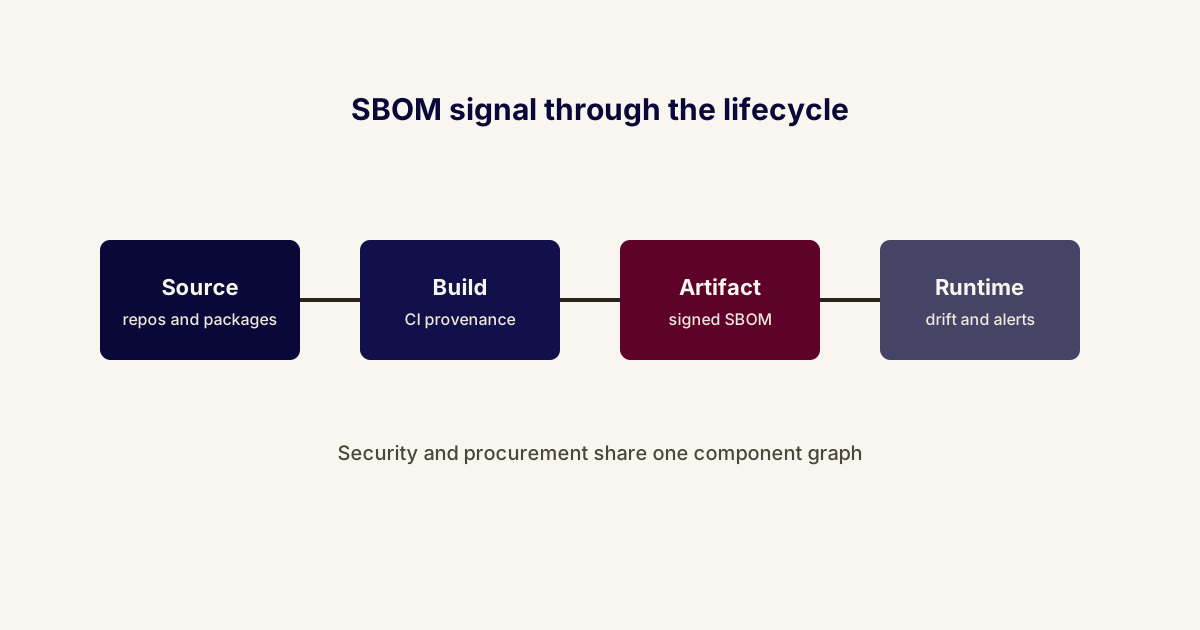
Software bills of materials stopped being a niche compliance topic when procurement teams realized renewals depend on answers security cannot produce from memory. An SBOM catalogs every component, library, and dependency inside a software product, giving organizations a machine-readable inventory they can audit and monitor. When these documents sit between build pipelines, contract repositories, and vulnerability response playbooks, they transform static checklists into living operational assets that procurement and security share.
Federal mandates, sector-specific regulations, and growing customer expectations have accelerated SBOM adoption across industries. Executive orders now require federal suppliers to provide SBOMs alongside delivered software, and private-sector buyers increasingly follow the same template. Organizations that treat this shift as paperwork alone miss the deeper opportunity: a component-level map of risk that improves decision-making across sourcing, engineering, and incident response teams simultaneously.
Start with scope honesty. Not every legacy binary will produce a perfect SPDX or CycloneDX file on day one. Publish a coverage map that shows which business services have machine-readable SBOMs attached to releases, and which still rely on transitional attestations. Prioritize the applications that handle sensitive data or face the public internet first, then work inward toward internal tooling and batch systems that carry lower exposure profiles.
Format selection matters more than teams expect. SPDX and CycloneDX each carry strengths: SPDX aligns well with license compliance use cases while CycloneDX offers tighter integration with vulnerability disclosure workflows. Pick one canonical format for internal production, define a translation layer for vendors who deliver in the other, and validate incoming documents against published schemas before they enter your asset inventory. Consistency here prevents downstream tooling fragmentation that quietly erodes program value.
We facilitate small-group sessions for customers and prospects without requiring a slide deck, focused on your stack, constraints, and the decisions you need to make next.
Procurement should ask for SBOM delivery as part of material software purchases, not as a voluntary appendix. Tie acceptance criteria to formats, signing expectations, and update cadence when vendors ship patches. Include contract language that specifies delivery within a defined window after each release, and establish penalty clauses or remediation timelines when vendors fail to meet those commitments. Clear terms in the agreement prevent ambiguity during audits and renewal negotiations.
Vendor readiness varies dramatically. Large platform companies may already publish SBOMs as part of their release process, while smaller niche vendors may need guidance and lead time. Consider building a tiered maturity model that sets expectations based on vendor size, contract value, and risk profile. Offer reference templates and validation tools to strategic partners so the requirement lifts the entire ecosystem rather than filtering out capable but under-resourced suppliers.
Security operations needs more than a ZIP file at contract signing. Integrate SBOM identifiers with your vulnerability management backlog so when a critical library spikes in the news, you can query impact in minutes instead of opening tickets across fifty teams. Automate the correlation between published CVEs and your SBOM inventory so that triage begins before analysts even log in. Speed of identification during a zero-day event is the metric that justifies the entire program investment.
Enrichment turns a raw SBOM into an actionable intelligence asset. Overlay vulnerability feeds, license databases, end-of-life status, and maintainer activity signals on top of each component record. When your dashboard surfaces a library that is both unpatched and maintained by a single volunteer, the risk conversation changes from theoretical to urgent. Automated enrichment pipelines should refresh nightly so the data teams rely on never drifts more than twenty-four hours behind reality.
Legal and risk teams care about license obligations and export considerations. SBOM metadata can surface transitive dependencies that quietly trigger copyleft or redistribution duties. Early visibility prevents last-minute release freezes. Pair legal review with automated policy engines that flag restricted licenses at pull request time rather than at release day. This shift-left approach keeps legal engaged continuously instead of inserting a bottleneck gate that developers learn to route around.
A cross-functional governance model prevents SBOM initiatives from becoming orphaned in a single department. Establish a working group with representatives from security, procurement, legal, engineering, and product management. Define ownership for ingestion tooling, storage, query interfaces, and exception handling. Rotate the chairperson role quarterly so institutional knowledge spreads and no single team bears the coordination burden permanently. Published meeting notes keep stakeholders outside the group informed without requiring attendance.
Runtime drift is the silent killer of SBOM programs. Containers rebuilt from floating tags and emergency hotfixes can diverge from the document you archived. Pair SBOMs with immutable artifact registries and deployment manifests that reference digests rather than mutable tags. Implement admission controllers that reject deployments when the running image digest does not match the digest recorded in the SBOM registry. This enforcement loop closes the gap between documentation and production truth.
Storage and access controls deserve deliberate architecture. SBOMs contain detailed information about your software stack that adversaries could use for reconnaissance if leaked. Store documents in a purpose-built repository with role-based access, encryption at rest, and audit logging for every query. Provide read-only API endpoints for authorized consumers like vulnerability scanners and compliance dashboards while restricting write access to build pipelines and verified vendor submission portals.

We recommend a quarterly executive summary: coverage percentage, mean time to answer whether you are affected, and vendors who missed SLAs for SBOM updates. The summary should fit on one page so committees actually read it. Accompany the summary with a trend line showing improvement or regression over the trailing four quarters. Executives respond to trajectory rather than snapshots, and a visible upward trend secures continued budget and sponsorship far more reliably than a single positive data point.
Beyond the executive summary, operational metrics guide day-to-day improvement. Track the percentage of releases that ship with a validated SBOM, the average time between vendor patch release and SBOM update delivery, and the false positive rate of your enrichment pipeline. Feed these metrics into engineering dashboards alongside build health and deployment frequency so teams treat SBOM hygiene as a normal quality signal rather than a separate compliance chore.
For open-source-heavy stacks, sponsor maintainers where you can and fund internal tooling that reduces false positives. SBOM value collapses when scanners flood teams with noise they learn to ignore. Invest in curated suppression lists, verified-fix databases, and contextual reachability analysis that filters alerts to only those paths actually exercised in your code. A smaller, accurate alert stream produces faster remediation than a firehose of unvetted warnings that erode team trust in the program.
Embedding SBOM generation into continuous integration pipelines ensures every build artifact carries a current inventory without manual intervention. Configure your build system to produce an SBOM as a first-class output alongside binaries and container images. Sign the document with a verifiable key so downstream consumers can confirm authenticity. Store the signed SBOM in the same artifact registry as the build output, linked by digest, so retrieval requires no separate lookup or manual correlation step.
Finally, practice failure. Run a tabletop where a widely used library is compromised and your SBOM query returns ambiguous results. Use the lessons to tighten fields, ownership, and integration tests that validate SBOM presence on every release train. Invite participants from procurement, legal, and communications alongside security so the exercise surfaces coordination gaps that pure technical drills miss. Document findings in a post-exercise report with assigned action items, owners, and deadlines that guarantee identified weaknesses translate into measurable improvements.
Software bills of materials succeed when organizations treat them as shared infrastructure rather than a compliance artifact owned by one team. The combination of procurement discipline, security automation, legal awareness, and engineering integration creates a feedback loop that strengthens with each iteration. Start with honest coverage assessments, build incrementally, and measure relentlessly. The goal is not perfection on day one but a steady trajectory toward a supply chain posture that withstands the next vulnerability headline without scrambling.