Insights · Article · Strategy · Mar 2026
A practical operating model for dual-run migrations, cutover rehearsals, and executive reporting.

Executives rarely dispute the need for modernization. They dispute sequencing, capital intensity, and who owns the risk when something breaks mid-migration. The teams that win publish explicit decision records, rehearse failure modes, and tie every increment to a customer- or regulator-visible outcome.
Legacy core platforms accumulate technical debt at a compounding rate. Every deferred upgrade widens the gap between current capabilities and market expectations. Organizations that postpone modernization face rising maintenance costs, increasing regulatory exposure, and talent attrition as skilled engineers gravitate toward modern stacks. The business case for transformation strengthens each quarter, but so does the complexity of executing the transition safely while preserving operational continuity for customers and partners.
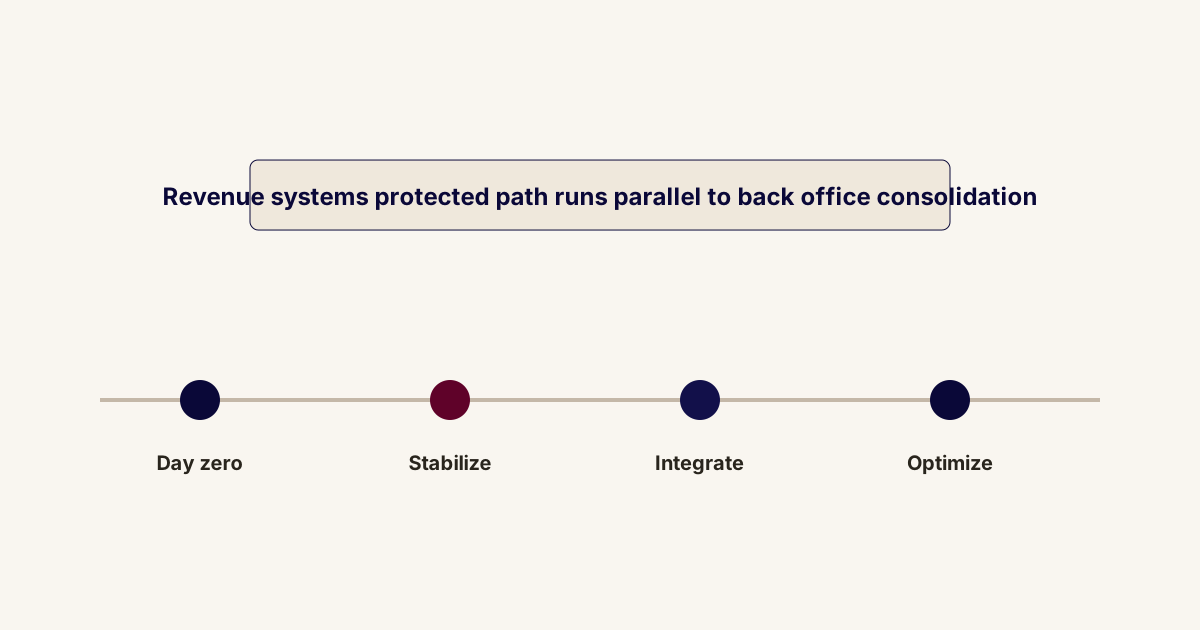
The dual-run migration pattern has emerged as the most reliable approach for organizations that cannot afford downtime. In a dual-run model, the legacy system and its replacement operate in parallel for a defined period. Transactions flow through both environments, allowing teams to validate output parity before fully retiring the old platform. This approach reduces cutover risk dramatically compared to a single weekend migration event.
Running two systems simultaneously requires rigorous operational discipline. Teams must define clear data ownership rules, establish synchronization checkpoints, and monitor for divergence in real time. Successful dual-run programs assign dedicated staff to reconciliation duties and automate comparison checks wherever possible. The cost of maintaining parallel environments is significant, but it pales in comparison to the cost of a failed migration that disrupts revenue or regulatory standing.
Data synchronization is often the most underestimated challenge in core system modernization. Schema differences between legacy and target platforms create mapping complexity that grows with each business rule exception. Teams should invest early in building a canonical data model that serves as the translation layer between environments. Automated reconciliation reports, generated daily during the dual-run period, provide the evidence base needed to approve each incremental cutover milestone.
We facilitate small-group sessions for customers and prospects without requiring a slide deck, focused on your stack, constraints, and the decisions you need to make next.
Cutover rehearsals are the single most effective risk reduction tool in any large migration program. A rehearsal simulates the full transition sequence, from final data extraction through system validation, in a controlled environment that mirrors production as closely as possible. The goal is to surface timing bottlenecks, dependency gaps, and communication failures before they can impact live operations. Teams that skip rehearsals consistently encounter avoidable surprises on go-live day.
Best practice calls for a minimum of three full rehearsals before the production cutover. The first rehearsal establishes baseline timing and exposes structural gaps in the runbook. The second rehearsal incorporates fixes and stress tests the rollback procedure. The third rehearsal should run at production speed with production data volumes, producing a final confidence score that the steering committee can use to authorize the actual transition window.
In our practice, we staff a single accountable director across architecture and operations for the critical window. That role bridges the project org chart and the steady-state service owners so knowledge does not evaporate at go-live.
The accountable director maintains a living dependency map that connects every workstream to shared milestones. This role convenes daily standups during the critical window, escalates blockers within hours rather than days, and ensures that every team understands the rollback trigger criteria. When the legacy and modern platforms both demand attention simultaneously, one person with cross-functional authority prevents decisions from stalling in committee review cycles.
Effective modernization governance extends beyond technology leadership. Finance, legal, compliance, and customer operations must all participate in milestone reviews. A joint steering committee that meets biweekly during the migration period ensures that business constraints surface early and that trade-off decisions reflect enterprise priorities rather than departmental preferences. Documenting every decision in a shared register creates an audit trail and accelerates onboarding for any new stakeholders who join the program.
Risk management during core modernization requires a structured framework that categorizes threats by probability and business impact. Technical risks such as data loss or integration failure sit alongside operational risks such as staff burnout and vendor dependency. Each identified risk should have a named owner, a mitigation plan, and a defined escalation path. Regular risk reviews, conducted weekly during active migration phases, keep the steering committee informed and prepared.
Rollback planning deserves the same rigor as forward migration planning. Every cutover step should have a documented reversal procedure with tested timing estimates. Teams often discover that rollback takes longer than the forward migration because data written to the new system must be reconciled back into legacy formats. Allocating explicit calendar time for rollback testing during each rehearsal cycle prevents the dangerous assumption that going back is simple or instantaneous.

Clear communication is the connective tissue of successful modernization. Internal stakeholders need consistent updates on timeline, risk posture, and milestone completion. External stakeholders, including customers, regulators, and partners, need advance notice of any service changes. Establishing a communication calendar with predefined templates for routine updates, escalation notices, and go-live announcements reduces the cognitive load on program leadership and ensures that no audience is overlooked during critical transition windows.
Breaking the modernization into incremental delivery milestones reduces program risk and builds organizational confidence. Each milestone should deliver a measurable business outcome rather than just a technical checkpoint. Migrating a single product line, onboarding one business unit, or enabling a new regulatory report on the target platform are examples of milestones that demonstrate tangible progress. Small wins sustain executive sponsorship and provide natural decision points to adjust scope or pace.
Tracking migration health requires a balanced scorecard that combines technical metrics with business outcomes. System performance benchmarks, data reconciliation accuracy rates, and defect density provide the engineering perspective. Customer satisfaction scores, transaction processing times, and regulatory compliance status provide the business perspective. Publishing this scorecard weekly to the steering committee creates accountability and gives leadership the evidence they need to maintain confidence in the program trajectory.
If you are preparing board materials, anchor on three narratives: what risk is reduced this quarter, what new revenue or cost lever is unlocked, and what evidence you can show without another expensive audit project. Everything else is supporting detail.
Executive dashboards should distill complex migration status into a single view that busy leaders can absorb in minutes. Use a traffic light model for workstream health, trend lines for key performance indicators, and a concise narrative summary that highlights the most important development since the last reporting period. Avoid cluttering the dashboard with technical jargon or granular task status. The goal is decision support, not comprehensive project tracking.
Modernization is as much an organizational change initiative as it is a technology project. Staff who have spent years mastering legacy systems need structured retraining programs and clear career pathways on the new platform. Ignoring the human dimension leads to passive resistance, knowledge hoarding, and attrition at the worst possible time. Investing in change management, skills development, and transparent internal communication pays dividends well beyond the migration itself.
The organizations that modernize core systems successfully treat the effort as a business transformation, not a technology replacement project. They build operating models that account for parallel operations, rehearse transitions with discipline, and report progress in language that resonates with boards and regulators alike. The result is a modern foundation that supports growth, reduces operational fragility, and positions the enterprise to respond to market shifts with speed and confidence.