Insights · Article · Operations · Apr 2026
Translate burn rates, customer journeys, and feature freeze decisions into narratives CFOs and directors understand without drowning them in percentile jargon.

Error budgets connect reliability investment directly to product engineering trade-offs, yet too many SRE teams present them in a language that alienates non-technical stakeholders. Executives engage when budgets align precisely with revenue-impacting journeys, regulatory uptime mandates, and explicit choices about shipping velocity versus system stabilization. The challenge is not collecting the data; it is translating telemetry into narratives that drive capital allocation decisions at the highest level of the organization.
The gap between engineering metrics and boardroom comprehension is not a knowledge problem; it is a framing problem. Percentile latency distributions and rolling error ratios carry enormous diagnostic value inside engineering teams, but they fail to communicate risk in terms directors understand. Reframing reliability as a financial instrument, one with a defined balance, a measurable burn rate, and clear consequences for depletion, bridges that gap and invites strategic conversation rather than glazed stares.
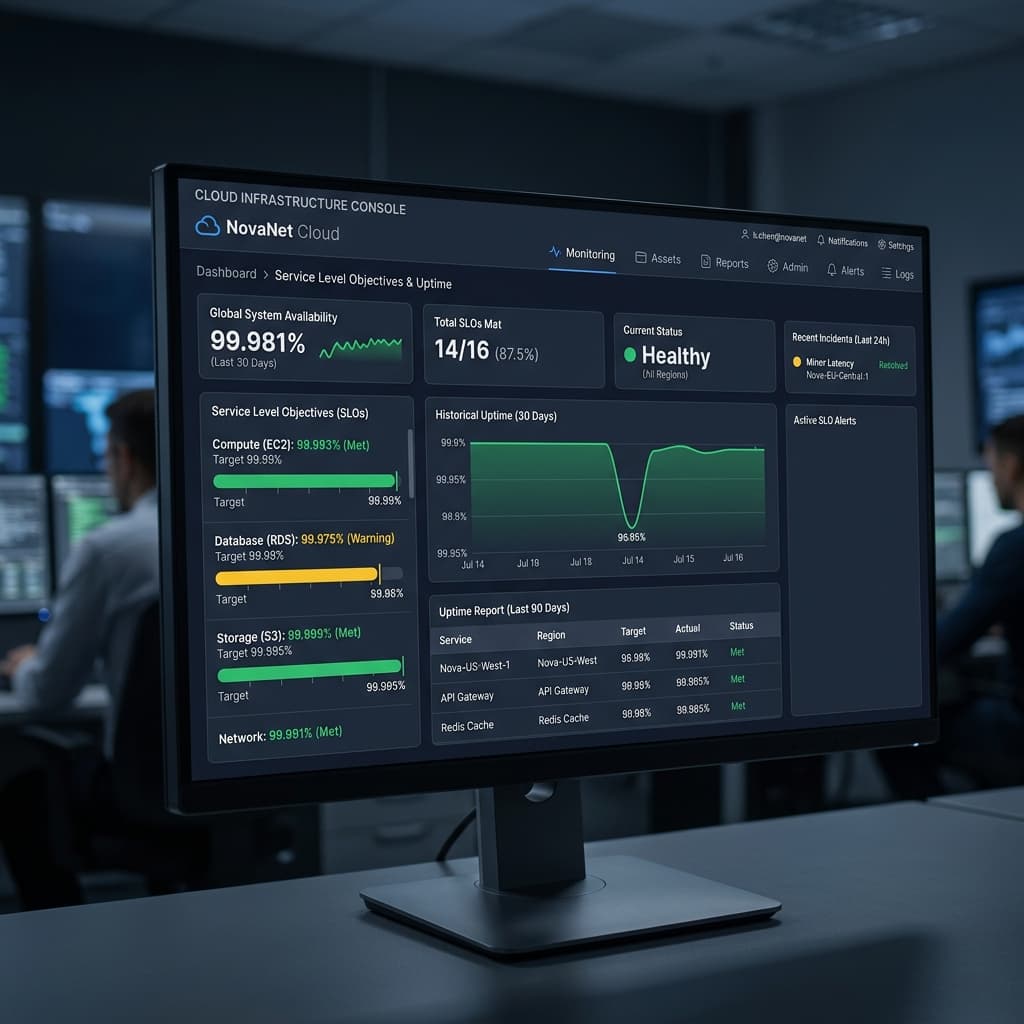
Start with a very small set of service level objectives tied to actual customer language. Measure checkout completion rates, login success percentages, and claims processing timelines instead of tracking internal microservice health metrics alone. Map complex architectural dependencies quietly in appendix material so you do not overwhelm the core board message. Every SLO on the executive slide should connect to a business outcome a director can contextualize within the company's strategic plan.
Selecting the right SLOs for board-level reporting demands collaboration between product, engineering, and finance teams. Product leaders identify which user journeys generate revenue and retention. Engineering leaders translate those journeys into measurable indicators. Finance leaders validate that the cost of missed targets is material enough to warrant executive attention. This cross-functional selection process ensures the board sees reliability metrics that genuinely reflect business health rather than arbitrary technical thresholds chosen by a single team.
We facilitate small-group sessions for customers and prospects without requiring a slide deck, focused on your stack, constraints, and the decisions you need to make next.
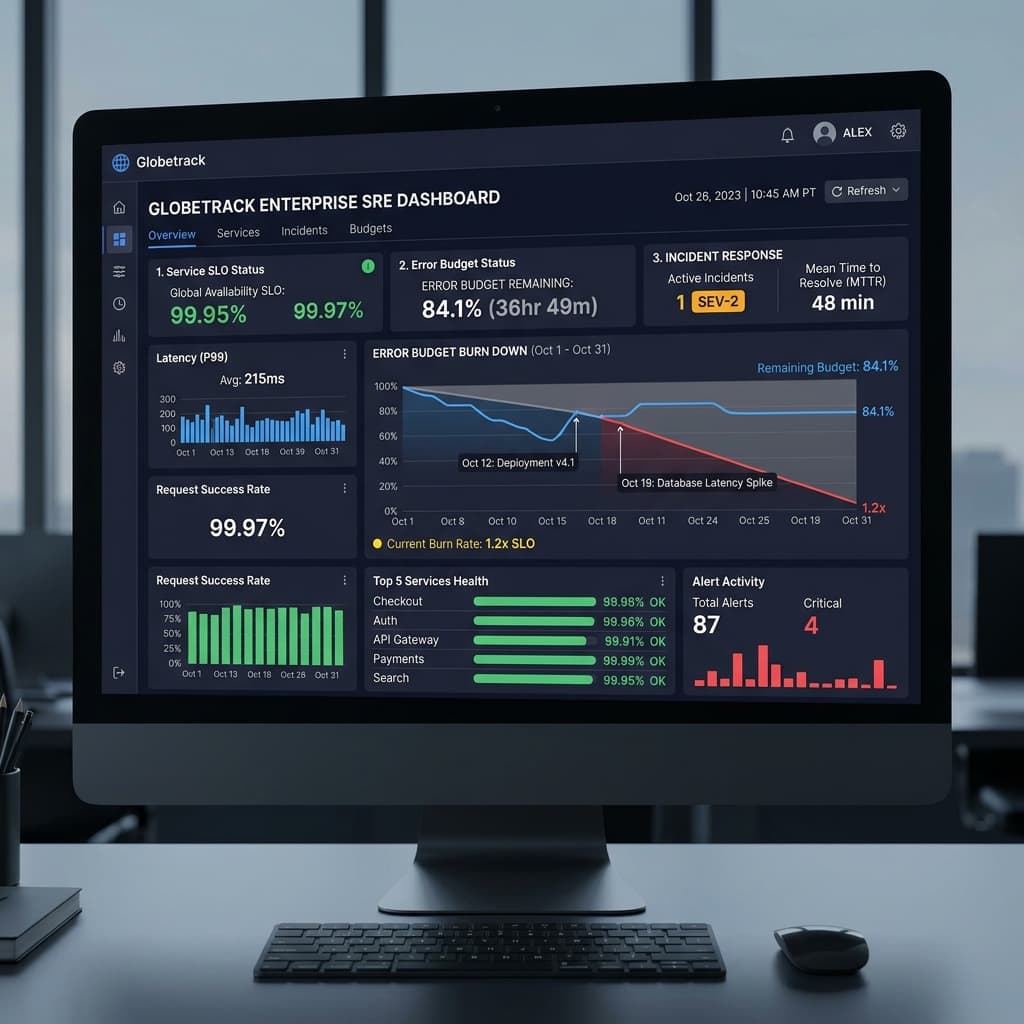
Burn rate trajectory matters significantly more than a single bad day. Show multi-window views that display remaining budget for the current month, the projected exhaustion date at the current consumption pace, and highlight specific incidents that consumed a disproportionate share of the available margin. This approach shifts the executive conversation from reactive panic to proactive resource planning, enabling leadership to allocate engineering capacity before a crisis rather than scrambling during one.
Incident attribution within the burn-down visualization gives directors the causal story behind the numbers. When a board member sees that a single configuration deployment consumed forty percent of a quarterly error budget, the conversation naturally turns to deployment governance, change management rigor, and testing investment. Presenting incidents as named, quantified budget consumers transforms abstract reliability discussions into concrete operational improvement agendas that boards can endorse with clear action items.
When error budgets actually exhaust, recovery policies should be pre-agreed and codified before the crisis occurs. Implementation of a strict feature freeze, redirecting engineering capacity toward technical debt reduction, or formal executive risk acceptance with a specifically named approver are standard responses. Ad hoc debates during major outages waste precious minutes, erode team morale, and create inconsistent precedents that undermine the credibility of the entire error budget framework in future reporting cycles.
Pre-agreed escalation frameworks also protect engineering leadership from political pressure to resume feature development prematurely. When the board has already ratified a policy stating that budget exhaustion triggers a mandatory stabilization sprint, individual executives cannot override that decision without formally accepting documented risk. This governance layer transforms error budgets from a monitoring curiosity into an organizational contract, giving reliability engineers genuine authority to slow down when system health demands it.
Finance leaders should clearly see the exact correlation between reliability spending and proactive incident reduction. Deploying significant capital for database redundancy, establishing active regional failover architectures, or investing in automated chaos engineering programs deserves the identical rigorous justification as speculative product bets. Present reliability investment proposals with expected return timelines, projected incident reduction percentages, and customer retention impact estimates to speak the language finance teams already use for every other budget request.
Framing reliability improvements as return-on-investment propositions also opens the door to multi-year planning horizons. A board that understands the compounding benefits of observability platform investments, automated remediation tooling, and on-call engineering staffing models can approve sustained funding rather than forcing teams to re-justify foundational spending every fiscal quarter. This long-term commitment stabilizes engineering roadmaps and reduces the boom-and-bust cycles that plague many reliability programs across the industry.
Customer communications belong prominently in the regular operational narrative presented to the board. Maintaining transparent public status pages and publishing honest technical postmortems reduces long-term customer churn far more effectively than pushing silent undocumented hotfixes overnight. Directors who understand the trust dividends of operational transparency become allies in resisting pressure to hide incidents, creating a culture where honest reporting strengthens rather than threatens the organization's market position.
Status page analytics, postmortem readership metrics, and customer support ticket trends during incidents provide quantitative evidence that transparency works. When the board sees that customers who received proactive outage notifications renewed contracts at higher rates than those who discovered problems independently, the argument for honest communication becomes self-reinforcing. Including these customer experience data points alongside error budget metrics creates a holistic reliability narrative that resonates with directors focused on retention and brand equity.
Avoid dashboard metric soup at all costs. If you present twenty distinct service level objectives simultaneously, leadership will remember none of them. Curate exactly three major indicators that represent material business risk and focus entirely on those core numbers during the primary board presentation. Additional detail can live in supplementary materials for directors who want deeper technical context, but the headline message must be ruthlessly simple, memorable, and directly tied to strategic priorities.
The three-indicator discipline forces engineering teams to prioritize ruthlessly. Choosing which SLOs earn a place on the executive slide requires honest conversations about which services truly matter to the business versus which services simply generate the most alerts. This prioritization exercise often reveals misaligned engineering investment, where teams pour resources into systems with minimal business impact while under-investing in the infrastructure powering the company's most critical revenue streams.
Board presentation packs need a comprehensive glossary appendix, clearly defined once and referenced consistently rather than repeated on every page. Teach foundational reliability terms like error budget, burn rate, and service level objective in a dedicated onboarding session for new directors. Then reuse consistent visual metaphors quarter over quarter to build organizational literacy, allowing presentations to grow more sophisticated as the audience's familiarity deepens over successive reporting cycles.
Visual consistency across quarters builds pattern recognition that accelerates boardroom discussions. Use the same color coding for budget status, the same chart formats for burn-rate trends, and the same layout for incident summaries every single time. Directors who recognize the template can immediately spot anomalies without re-learning the visualization framework. This compounding familiarity is one of the most underrated advantages of disciplined, standardized executive reliability reporting over time.
Rehearse the difficult questions directors will inevitably ask before every board meeting. Prepare comparative performance benchmarks against industry peers, understand the exact cyber insurance claim implications of a major outage, and map out legal and regulatory notification thresholds for various incident severity levels. Knowing these answers before they are requested signals preparedness and earns the credibility that transforms SRE leadership from a cost center presenter into a trusted strategic advisor.
Building institutional trust around reliability reporting is a multi-quarter, cumulative effort rather than a single presentation victory. Each board cycle that delivers consistent, accurate, and actionable error budget updates strengthens the relationship between engineering leadership and the directors who fund their work. Over time, this trust enables faster capital approvals for reliability investments, smoother incident response communications, and a shared organizational vocabulary that treats system resilience as a first-class strategic asset.