Insights · Article · Data & AI · Mar 2026
Model cards, vendor attestations, and update windows that keep legal, security, and ML aligned when third party models change weekly.

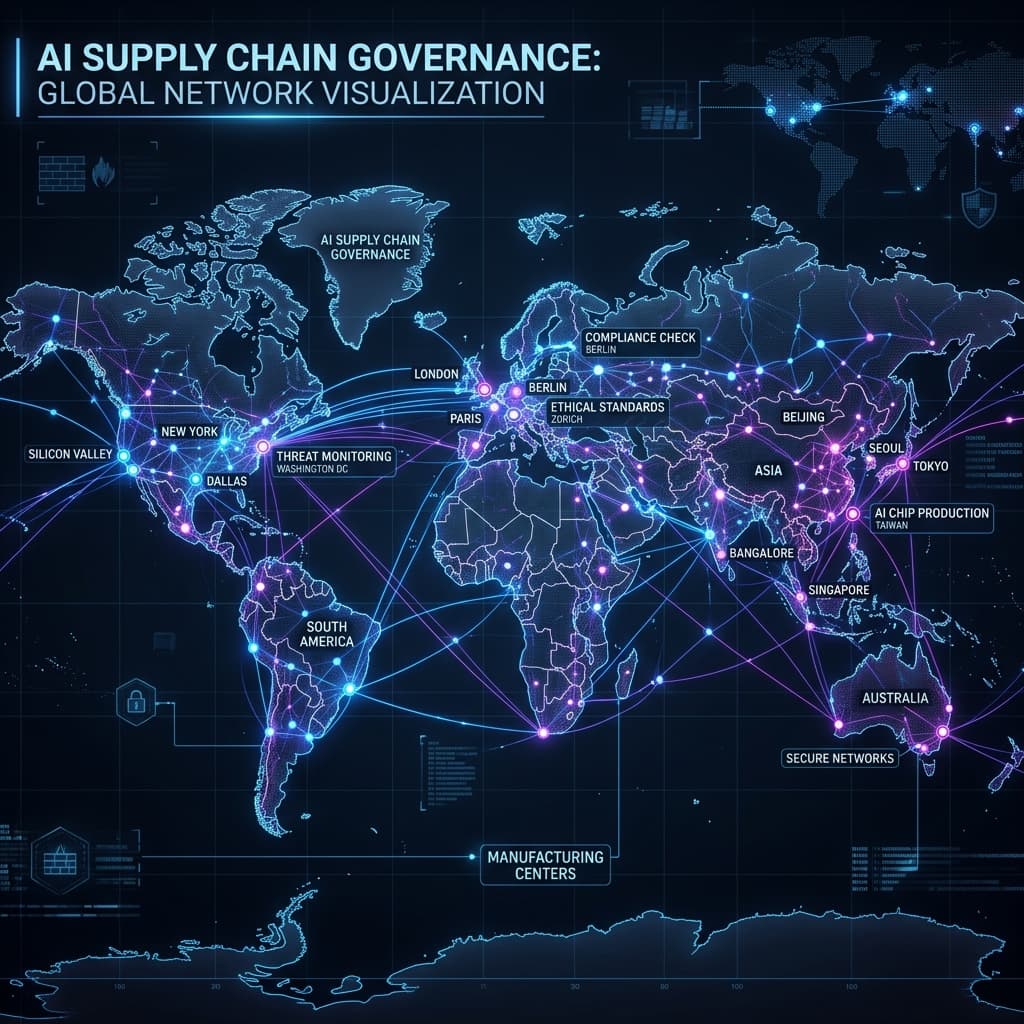
Most enterprise procurement playbooks assume that software versions change on a monthly or quarterly basis. The reality of modern artificial intelligence is fundamentally different. Embeddings, safety guardrails, and foundation models ship continuously on rolling release trains, sometimes updating multiple times in a single day. Corporate governance must evolve from static, one-time vendor questionnaires to continuous, programmatic evidence collection. Organizations that cling to legacy review cycles will find themselves exposed to risks they never formally evaluated.
The fundamental challenge lies in the opacity of third-party AI services. A vendor might swap out an underlying embedding model over a weekend to improve latency, inadvertently introducing new biases or altering the vector outputs your downstream classification pipelines rely upon. Without rigorous supply chain governance, these silent updates can cause cascading failures across regulated financial, healthcare, or government systems. The speed at which these changes propagate makes manual oversight fundamentally insufficient for modern enterprise deployments.
Regulators across multiple jurisdictions are accelerating their focus on AI supply chain transparency. The European Union AI Act introduces explicit requirements for providers and deployers to document model lineage. In the United States, executive orders and sector-specific guidance from agencies such as the OCC and the FDA increasingly demand traceability for automated decision systems. Enterprises that build governance infrastructure today will find compliance far less disruptive than those racing to retrofit controls under growing regulatory pressure.
The cost of inaction is substantial and measurable. Organizations that have experienced undisclosed model changes in production report average incident resolution times exceeding 72 hours, largely because teams cannot quickly determine whether a failure originated from their own code, the vendor's model, or a subtle interaction between the two. In financial services, a single undetected model drift event can trigger regulatory penalties, reputational damage, and the costly unwinding of thousands of automated decisions made on flawed outputs.
We facilitate small-group sessions for customers and prospects without requiring a slide deck, focused on your stack, constraints, and the decisions you need to make next.
To manage this complexity, we recommend grouping governance controls into three distinct, mutually reinforcing layers. The first layer focuses on what the vendor must prove before and during the engagement. Traditional SOC 2 or ISO certifications serve only as a baseline. Modern AI vendors must provide detailed model cards, complete training data provenance disclosures, and explicit fine-tuning constraint documentation. If a vendor cannot definitively prove that their model was completely isolated from your proprietary tenant data, they should fail the initial procurement gate outright.
Model cards deserve particular attention in procurement evaluations. A well-structured model card documents the intended use cases, known limitations, performance benchmarks across demographic groups, and the training data composition at a granular level. Procurement teams should require model cards to be versioned and timestamped, with automatic notifications pushed to your governance system when a new version is published. Treating model cards as living compliance artifacts rather than static PDFs transforms them into a meaningful, enforceable governance tool.
The second layer dictates what your internal engineering pipelines must enforce. Trust cannot be established solely through legal contracts. Pipelines must enforce strict API version pinning, cryptographic hashes of downloaded model weights, and aggressive semantic drift checks. When your continuous integration system detects that a vendor model's output distribution has shifted beyond a predefined threshold, it should trigger an automatic deployment rollback and alert the responsible engineering team before any degraded output reaches production users.
Semantic drift monitoring requires maintaining a curated golden dataset of representative test prompts and expected outputs. Every night, or more frequently for mission-critical systems, this dataset should run against the vendor API. If classification accuracy, toxicity filter performance, or embedding similarity scores degrade past acceptable tolerances, the system must sever the connection and fall back to the last known good state. This defensive architecture ensures that vendor-side regressions never silently become your production incidents.
Resilience planning extends well beyond simple rollback triggers. Engineering teams should maintain warm standby configurations for every critical AI capability, potentially spanning multiple vendor providers or locally hosted alternatives. If your primary large language model vendor experiences an outage or ships a breaking regression, traffic should automatically route to a secondary provider or a self-hosted model with acceptable, if somewhat reduced, capability. This multi-vendor strategy also strengthens negotiating leverage during contract renewals and reduces the risk of dangerous single-vendor lock-in across your AI portfolio.
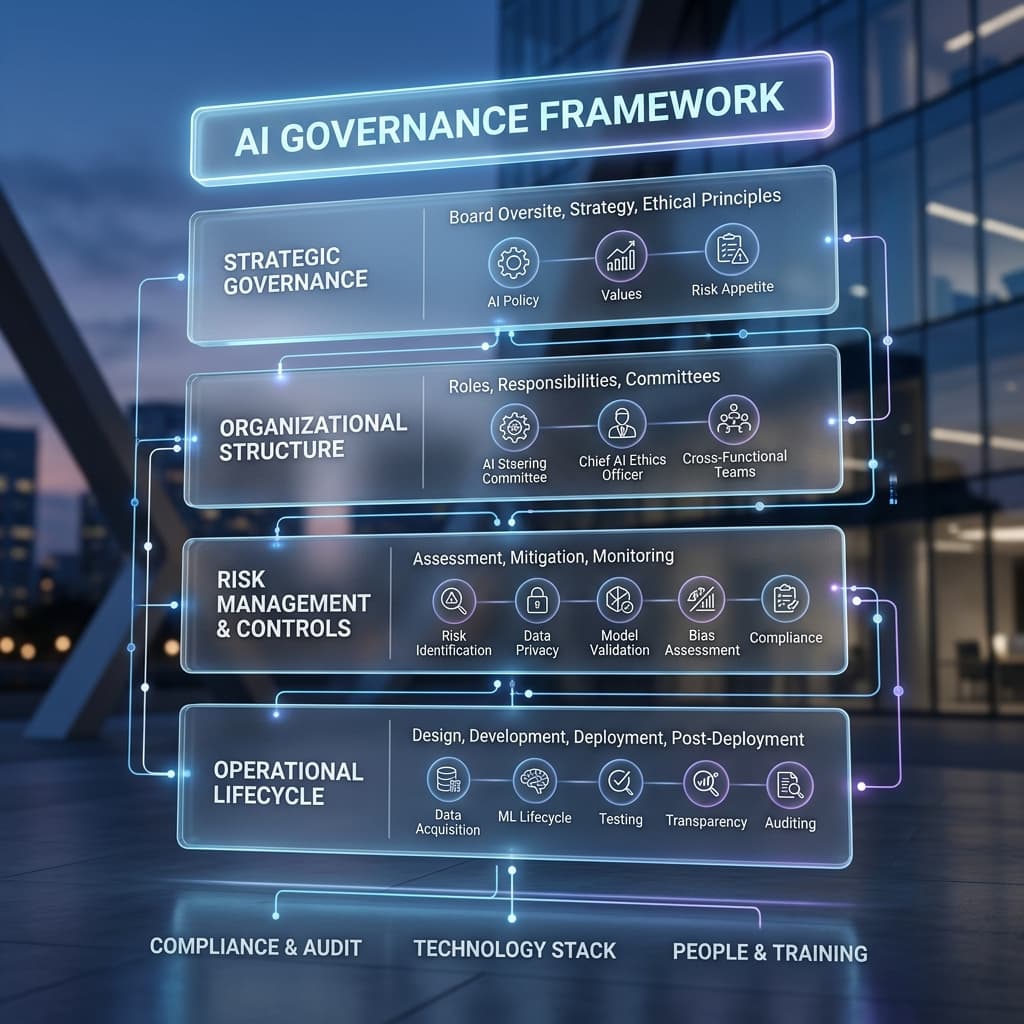
The third layer focuses on what executive committees and compliance officers see. Regulators are increasingly asking specific questions about who approved which model version for which decision path. Traditional slide decks assembled before an audit are no longer sufficient. Organizations need dynamic dashboards tied directly to incident management systems and CI/CD metadata, providing real-time visibility into every model version, every configuration change, and every approval decision across the entire AI estate.
If an auditor asks why a particular loan application was rejected on a specific Tuesday in October, your systems must pinpoint the exact version of the evaluation model in use, the specific vendor API endpoint it called, and the model card data available at that precise moment. If you cannot answer that query in minutes, you are already falling behind the supervisory curve. Proactive traceability is no longer aspirational; it is a baseline regulatory expectation for AI-driven decision making.
Legal teams must collaborate closely with engineering leaders to establish structured update windows. Rather than allowing vendor APIs to update silently at any time, contracts should negotiate specified maintenance windows aligned with your own release cycles. During these windows, automated validation test suites run extensively to confirm that the new underlying model infrastructure meets the same safety, accuracy, and fairness thresholds as the previous version. Only after passing these gates should production traffic shift to the updated endpoint.
Vendor attestations must be digitally signed and stored in immutable, append-only logs. The concept of a Software Bill of Materials is now evolving into an AI Bill of Materials, commonly referred to as an AIBOM. An AIBOM catalogs not just the software libraries in the stack, but the distinct datasets used for foundation training, the secondary datasets used for reinforcement learning from human feedback, and the precise safety alignment protocols applied before each release.
Effective AI supply chain governance also demands a cross-functional operating model that transcends traditional organizational silos. A dedicated governance council, comprising representatives from legal, information security, data science, procurement, and line-of-business operations, should convene on a regular cadence to review vendor risk postures, approve new model integrations, and adjudicate escalations from automated monitoring systems. This council must have clear decision rights and direct executive sponsorship to avoid becoming yet another advisory body that lacks meaningful enforcement authority.
Organizations typically progress through three maturity stages in AI supply chain governance. At the foundational stage, they establish manual vendor checklists and basic contractual language. At the intermediate stage, they automate drift detection, version pinning, and attestation validation within their CI/CD pipelines. At the advanced stage, governance is fully embedded into the platform engineering layer, with real-time policy enforcement, automated AIBOM generation, and self-healing rollback mechanisms that require zero human intervention for predefined failure scenarios.
Ultimately, AI supply chain governance is not about slowing down innovation. It is about creating a paved road where data scientists can experiment safely and rapidly while the organization maintains full auditability. By programmatically encoding vendor trust requirements and enforcing rigorous technical validation at every layer, regulated enterprises can confidently deploy advanced AI systems. The organizations that treat governance as a strategic accelerator, rather than a compliance burden, will be the ones that scale AI most effectively across the enterprise.