Insights · Article · Engineering · Apr 2026
Design systems, automated tests, assistive tech dogfooding, and production monitoring that make WCAG alignment durable across enterprise software releases.

Annual accessibility audits produce static PDF reports that age the moment the next sprint ships. Teams scramble through remediation backlogs, patch surface-level violations, and then watch the same issues reappear within weeks. Durable accessibility programs do not rely on these one-off sprints. Instead, they embed accessibility deeply into design systems, engineering definitions of done, continuous integration pipelines, and operational monitoring workflows that persist across every release cycle.
Many organizations still treat accessibility as a compliance checkbox, reacting only when legal risks surface or major enterprise clients demand a Voluntary Product Accessibility Template. However, modern engineering organizations recognize that inclusive design is a leading indicator of code quality. When interfaces are semantically structured, properly labeled, and keyboard navigable, they are inherently more resilient, easier to test, and highly performant across devices. Accessibility failures frequently signal deeper architectural weaknesses that affect all users.
The business case extends well beyond risk mitigation. Accessible products reach broader markets, including the estimated one billion people worldwide who live with some form of disability. Government procurement increasingly mandates Section 508 and EN 301 549 compliance as baseline requirements rather than optional preferences. Organizations that treat accessibility as an engineering discipline rather than a legal afterthought gain measurable advantages in both market reach and contract eligibility.
Building a durable accessibility posture begins long before a single line of frontend code is written. It starts with the fundamental design tokens and shared component libraries that define the visual and interactive language of the product. When these foundational layers encode accessibility constraints by default, every downstream team inherits correct behavior without needing to rediscover best practices independently.

Design tokens should encode contrast-safe palettes, focus ring visibility configurations, and motion reduction preferences natively. Designers require tools that make correct and accessible choices significantly easier than exceptions. By defining semantic color tokens (like 'error-text' and 'success-background') rather than hardcoded hex values, teams ensure that dark modes, high contrast themes, and forced color environments meet WCAG AA or AAA guidelines without requiring engineers to manually calculate contrast ratios for each variation.
We facilitate small-group sessions for customers and prospects without requiring a slide deck, focused on your stack, constraints, and the decisions you need to make next.
Typography tokens play an equally critical role in scalable accessibility. Responsive type scales should support user-defined font sizing at the operating system level. If your application breaks when a user scales their default font size by 200 percent, your component architecture is fundamentally fragile. Tokenizing line heights, paragraph spacing, and touch target sizes prevents these regressions at scale. Interactive elements must maintain minimum touch targets of 44 by 44 CSS pixels regardless of viewport or zoom level.
Beyond tokens, shared component libraries should ship with built-in accessibility contracts. Every interactive component needs clearly defined keyboard interaction patterns, ARIA attribute mappings, and focus management behaviors documented alongside its visual API. When accessibility requirements live inside the component itself rather than in external documentation, consuming teams cannot accidentally bypass them. This 'accessible by default' approach dramatically reduces the number of violations introduced during feature development.
Engineering standards must prioritize semantic HTML before resorting to ARIA attribute sprawl. While WAI-ARIA provides powerful tools for defining complex interactions, the fundamental rule is that no ARIA is better than bad ARIA. Native HTML elements like buttons, navigation links, and select dropdowns come with built-in state management and keyboard event handlers painstakingly optimized by browser vendors. Rebuilding these from scratch using div and span tags introduces immense overhead, unpredictable cross-browser behavior, and frequent accessibility failures that compound over time.
To enforce these practices, automated linting in continuous integration pipelines becomes indispensable. Tools that scan abstract syntax trees and static markup catch many common failures early in the development lifecycle. Missing alt attributes, invalid ARIA roles, insufficient form labels, and color contrast violations can be blocked from merging entirely. We recommend configuring these checks as hard gates rather than advisory warnings, ensuring that accessibility regressions never reach production through the standard deployment path.
However, automated testing cannot replace manual keyboard traversal and screen reader evaluation for complex interactive widgets. A scanner can verify that an aria-expanded attribute exists, but it cannot determine whether the relationship between a trigger and its collapsible content makes logical sense to a user navigating without sight. This gap demands a deliberate testing culture that pairs automated coverage with structured manual review protocols during each sprint cycle.
Dogfooding with actual assistive technologies builds profound empathy and uncovers critical bugs that automated scanners completely miss. We recommend rotating engineers through monthly accessibility hours so that knowledge spreads throughout the organization beyond a single siloed specialist. When developers experience firsthand the frustration of a focus trap, the confusion of an unannounced DOM mutation via VoiceOver or NVDA, or the disorientation of broken heading hierarchies, their approach to building interfaces permanently shifts toward inclusive patterns.
Establishing a consistent assistive technology testing matrix is essential for enterprise-grade products. At minimum, teams should validate against VoiceOver with Safari on macOS, NVDA with Chrome on Windows, and TalkBack with Chrome on Android. Testing exclusively with one screen reader creates blind spots because each tool interprets ARIA semantics and announces content differently. A documented testing matrix, integrated into the quality assurance process, ensures broad and reliable coverage.
Third-party component libraries and embedded software remain extremely common weak points for enterprise accessibility. Vendor questionnaires should mandate the inclusion of current VPATs, binding remediation service level agreements, and demonstrable proof of complete keyboard support. Procurement teams must be empowered to block software upgrades or integrations that introduce regressions without a strict mitigation plan. Treating vendor accessibility posture as a procurement criterion prevents costly downstream remediation that often exceeds the cost of the original integration.
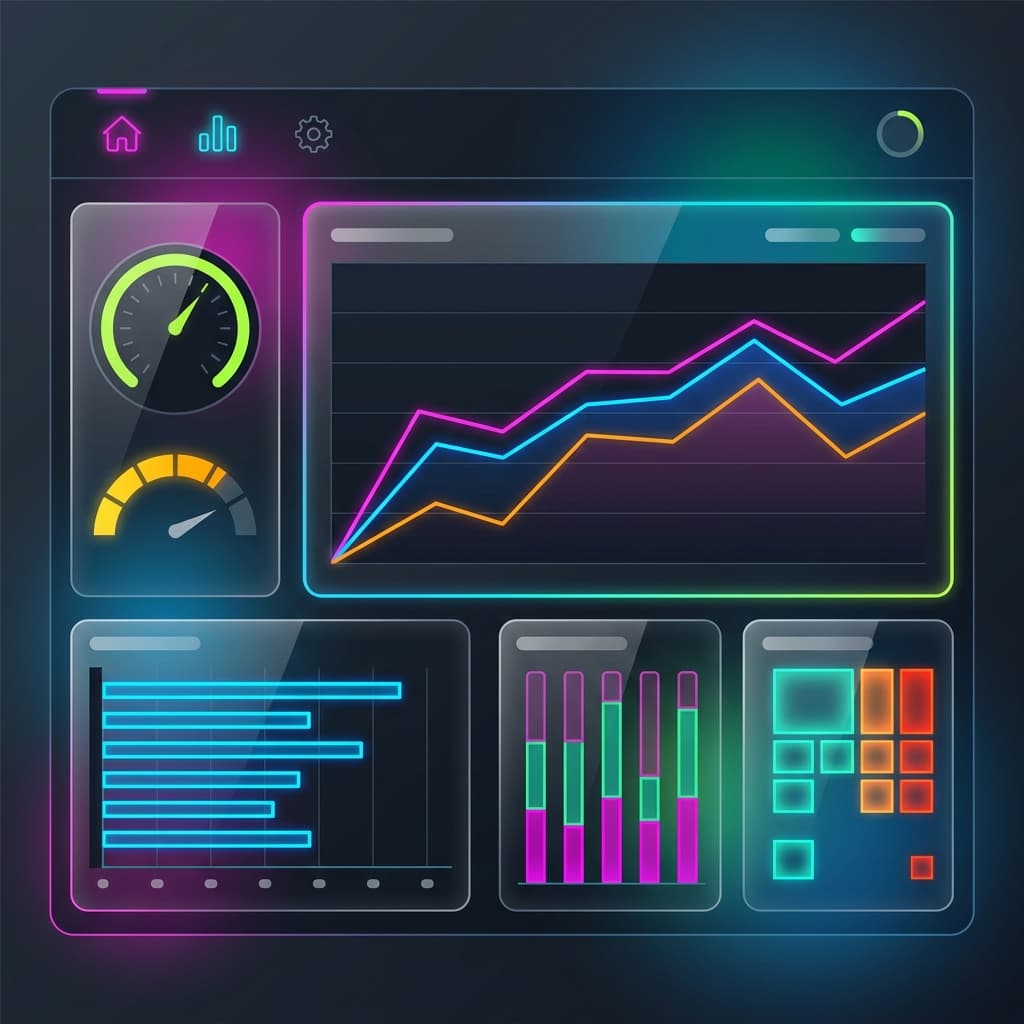
Production monitoring represents the final, often ignored frontier of accessibility engineering. Most telemetry platforms track API latency and memory consumption, but very few track accessible user flows. Production monitoring can include user-reported barriers via contextual feedback forms, support ticket tagging with accessibility-specific categories, and synthetic session replays where privacy permits. Constructing an 'Accessibility Health Dashboard' bridges the gap between engineering efforts and product management visibility, giving leadership a quantitative view of inclusive product quality.
These quantitative signals justify ongoing roadmap investment in accessibility infrastructure. Legal and procurement partners need to understand that accessibility is a continuous operational cost, entirely distinct from a one-time project line item. Organizations must budget proactively for remediation sprints following major visual redesigns, frontend framework migrations, or third-party component upgrades. Treating accessibility as recurring operational expenditure ensures that improvements compound over time rather than eroding between audit cycles.
Training and documentation are equally necessary to sustain organizational alignment. General training seminars often fail because abstract rules formulated without context feel bureaucratic to developers under deadline pressure. Instead, connect accessibility standards directly to examples from your own proprietary codebase. Concrete fixes, complete with 'before' and 'after' code snippets drawn from familiar components, feel highly achievable. Embedding accessibility guidance into onboarding checklists and internal wikis reinforces correct patterns at the point where new engineers form habits.
Organizations that mature their accessibility practices typically progress through identifiable stages. Reactive teams address violations only after external audits flag them. Proactive teams embed automated checks and structured manual testing into every sprint. Leading organizations go further, instrumenting production telemetry, funding dedicated accessibility engineering roles, and treating WCAG conformance as a continuous delivery metric alongside uptime and performance. Understanding where your organization sits on this maturity curve clarifies which investments will yield the greatest return.
Punitive compliance models create friction and breed resentment among engineering teams. It is far more effective to celebrate the teams and individuals who ship genuinely inclusive features. Internal recognition accelerates adoption significantly faster than the fear of compliance violations or pending lawsuits. When accessibility transforms from a tax on deployment velocity into a marker of true engineering excellence, the entire platform benefits, and so do the millions of users who depend on inclusive digital experiences.